Repair or Replace Your Fiber Distribution Cabinet: A TCO Guide
By Jergeo Engineering Team | Published October 2026 · 8 min read
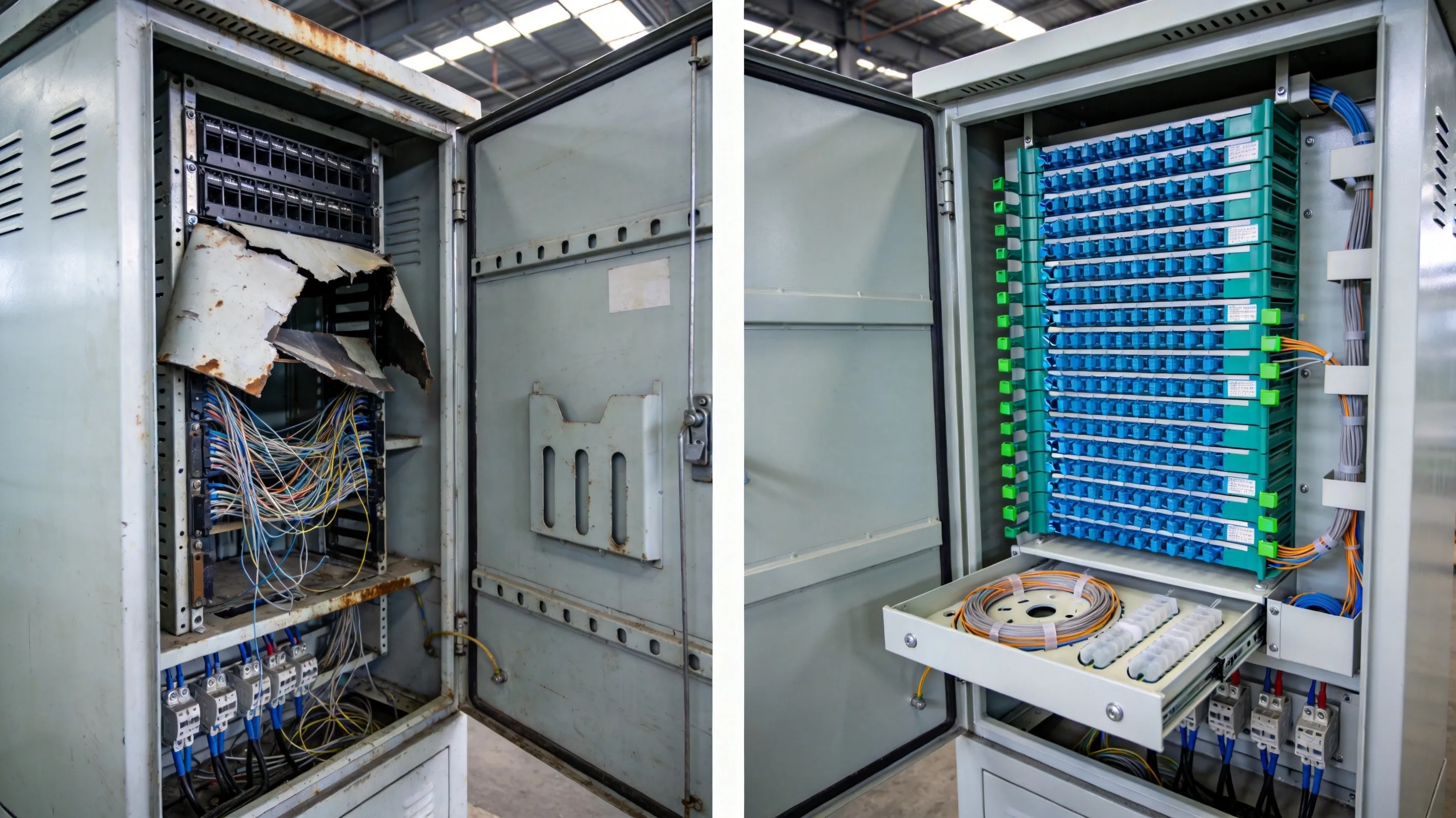
Every outdoor fiber distribution cabinet faces a crossroads: at some point, the cost of keeping it running exceeds the value of doing so. The question is when. Repair too often and you pour money into a sinking asset. Replace too early and you waste the remaining useful life. This guide gives you a practical framework — based on total cost of ownership (TCO) — to make the repair-or-replace decision with confidence.
Summary
Repair when damage is localized (seals, glands, trays) and costs under 50% of a replacement unit. Replace when the shell structure is corroded, IP rating cannot be restored, or failures recur within 12 months. A quality IP65 SMC cabinet has a 20-25 year lifespan; TCO over that period ranges from $400-$1,500 including maintenance. The 50% rule and age threshold together provide the simplest reliable decision framework.
The 50% rule: your first decision filter
The simplest and most widely used rule in telecom maintenance is the 50% rule: if the cost of repairing a cabinet exceeds 50% of the cost of a new replacement unit, replace it instead. This threshold is consistent with asset management guidelines referenced by the Telecommunications Industry Association and widely adopted in infrastructure maintenance. It accounts for the fact that older cabinets are likely to develop additional failures soon after repair, compounding costs.
Here is how it works in practice:
- Repair scenario: A JFDC-288A cabinet (replacement cost ~$450) needs new door gaskets ($35) and a corroded cable gland ($20). Total repair: $55 — well under 50%. Repair is the right call.
- Replace scenario: The same cabinet has structural corrosion on the shell, multiple failed seals, and water damage to internal trays. Repair estimate: $280. That is 62% of replacement cost. Replace.
- Grey zone: Repair cost is 40-50% of replacement. Consider the cabinet's age and failure history. If it has been trouble-free for 10+ years and this is an isolated issue, repair. If failures have been recurring, replace.
Common repairable issues (and what they cost)
Not all damage is equal. Some problems are cheap to fix and restore the cabinet to near-new performance. Others signal deeper degradation. Here is a breakdown of the most common field issues:
| Issue | Repair cost (typical) | Repair difficulty | Life extension |
|---|---|---|---|
| Door gasket degradation | $20-$50 | Easy (15 min) | 3-5 years |
| Corroded cable glands | $15-$40 each | Easy (10 min each) | 3-5 years |
| Damaged splice tray | $30-$80 | Moderate (30 min) | 5+ years |
| Broken hinge or latch | $10-$30 | Easy (10 min) | 5+ years |
| Ventilation filter clog | $5-$15 | Easy (5 min) | 1-2 years |
| Lock mechanism failure | $15-$35 | Easy (15 min) | 5+ years |
These are all modular, field-replaceable components. A well-designed fiber distribution cabinet like the Jergeo JFDC series uses standardized parts precisely to make these repairs fast and inexpensive.
Signs your cabinet has reached end-of-life
Some failures are not worth repairing because they indicate systemic degradation. Watch for these signals:
- Structural shell corrosion — rust penetrating the SMC or steel shell cannot be patched. The IP rating is permanently compromised.
- Repeated moisture ingress — if you have addressed condensation (see our condensation guide) and the problem returns within 6 months, the shell integrity is gone.
- Multiple component failures in the same year — one repair is normal; three repairs in 12 months means the cabinet is in cascading failure mode.
- IP rating cannot be restored — if new gaskets and glands still fail leakage testing, the mounting surfaces or door frame are warped beyond serviceability.
- Capacity obsolescence — the cabinet is physically sound but too small for current network demands. In this case, replacement delivers both reliability and capacity gains.
Total cost of ownership: the full picture
TCO is more than the purchase price. For an outdoor fiber distribution cabinet, the major cost components over a 20-year lifespan are:
| Cost component | Typical range | % of TCO |
|---|---|---|
| Initial purchase | $200-$800 | 35-55% |
| Installation (labor + mounting) | $50-$200 | 10-15% |
| Periodic maintenance (seals, glands, filters) | $50-$200 | 10-15% |
| Unscheduled repairs | $50-$300 | 10-20% |
| Truck rolls for fault diagnosis | $50-$400 | 10-25% |
The hidden cost that catches most operators off guard is truck rolls. Every site visit to diagnose or repair a cabinet in the field costs $50-$400 in labor and travel. A cabinet that fails twice a year adds $100-$800 in visit costs alone — often exceeding the cabinet's original purchase price within 5 years. This is why investing in a higher-quality IP65 cabinet upfront (which has fewer field failures) delivers better TCO than a cheaper IP55 unit in exposed environments.
Understanding the difference between IP55 and IP65 ratings helps you make this calculation accurately at the time of initial purchase.
The retrofit option: a middle ground
Before committing to full replacement, consider whether retrofitting can extend the cabinet's useful life. Retrofit is cost-effective when the shell structure is intact but performance has degraded:
- Seal upgrade: Replace all door gaskets and cable entry seals with premium silicone-based alternatives. Cost: $40-$80. Restores IP rating.
- Add desiccant breather: Install a pressure-equalizing breather valve to prevent condensation buildup. Cost: $25-$60.
- Tray upgrade: Swap old splice trays for higher-capacity or better-organized modules. Cost: $50-$120. Useful when network expansion exceeds original capacity.
- Add thermostatic heater: For cold-climate sites, a small heater prevents condensation and ice damage. Cost: $30-$70.
Total retrofit cost typically runs 30-50% of a new cabinet, and can extend service life by 5-10 years if the shell is structurally sound.
Decision framework: repair, retrofit, or replace?
Use this step-by-step framework when evaluating a field cabinet:
- Assess structural integrity. Is the shell corroded, warped, or cracked? If yes → replace. If no → go to step 2.
- Estimate repair cost. Get a quote for all needed repairs. If it exceeds 50% of replacement cost → replace. If no → go to step 3.
- Check failure history. Has this cabinet required 2+ unscheduled repairs in the past 12 months? If yes → replace. If no → go to step 4.
- Evaluate capacity needs. Does the current cabinet meet port count requirements? If no → replace (or retrofit with higher-density trays if the shell allows). If yes → go to step 5.
- Consider retrofit. If the shell is sound, repair cost is moderate, and failures are not cascading, a targeted retrofit (seals + breather + heater) can extend life 5-10 years at 30-50% of replacement cost.
Key takeaway
The repair-or-replace decision is not emotional — it is mathematical. Use the 50% rule as your first filter, check the shell integrity, count recent failures, and calculate TCO including truck rolls. A well-maintained IP65 fiber distribution cabinet should serve 20-25 years; if yours is failing before that, either the environment is harsher than the rating can handle, or the cabinet was under-specified from the start. Either way, the solution is better-spec equipment — not more patches.
Frequently Asked Questions
How do I know if my fiber distribution cabinet should be repaired or replaced?
What are the most common repairable issues in outdoor fiber cabinets?
What is the typical total cost of ownership for an outdoor fiber distribution cabinet?
Can I upgrade an old fiber cabinet instead of fully replacing it?
How long should a fiber distribution cabinet last before replacement?
Related Products
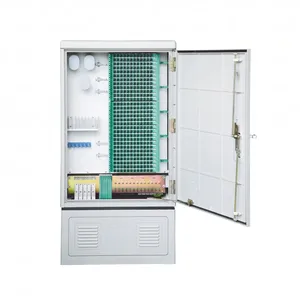
JFDC-288A Fiber Distribution Cabinet
288-port IP65 SMC cabinet with field-replaceable modular components
View Product →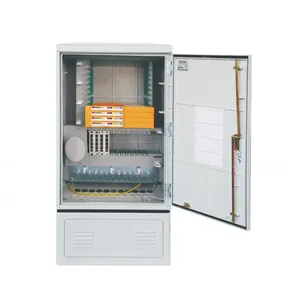
JFDC-144A Fiber Distribution Cabinet
144-port compact IP65 cabinet for mid-network distribution nodes
View Product →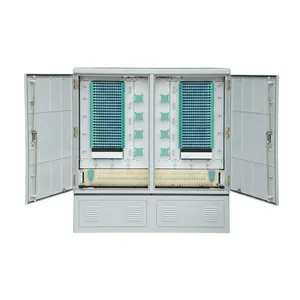
JFDC-576A Fiber Distribution Cabinet
576-port high-capacity IP65 cabinet for backbone distribution
View Product →Related categories
Related Articles
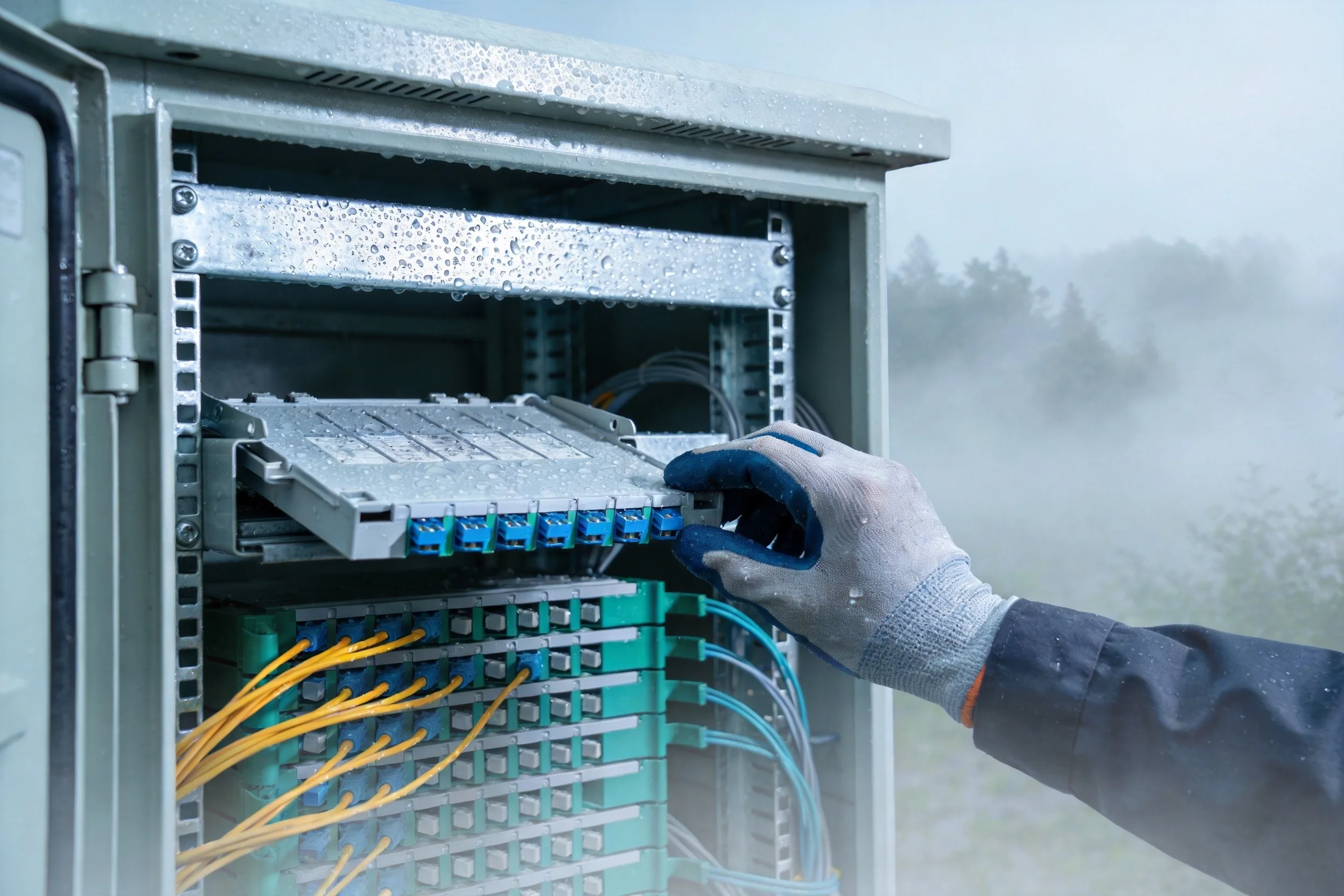
Fiber Distribution Cabinet Condensation Guide
Why moisture forms inside outdoor cabinets and how to stop it.
Read Article →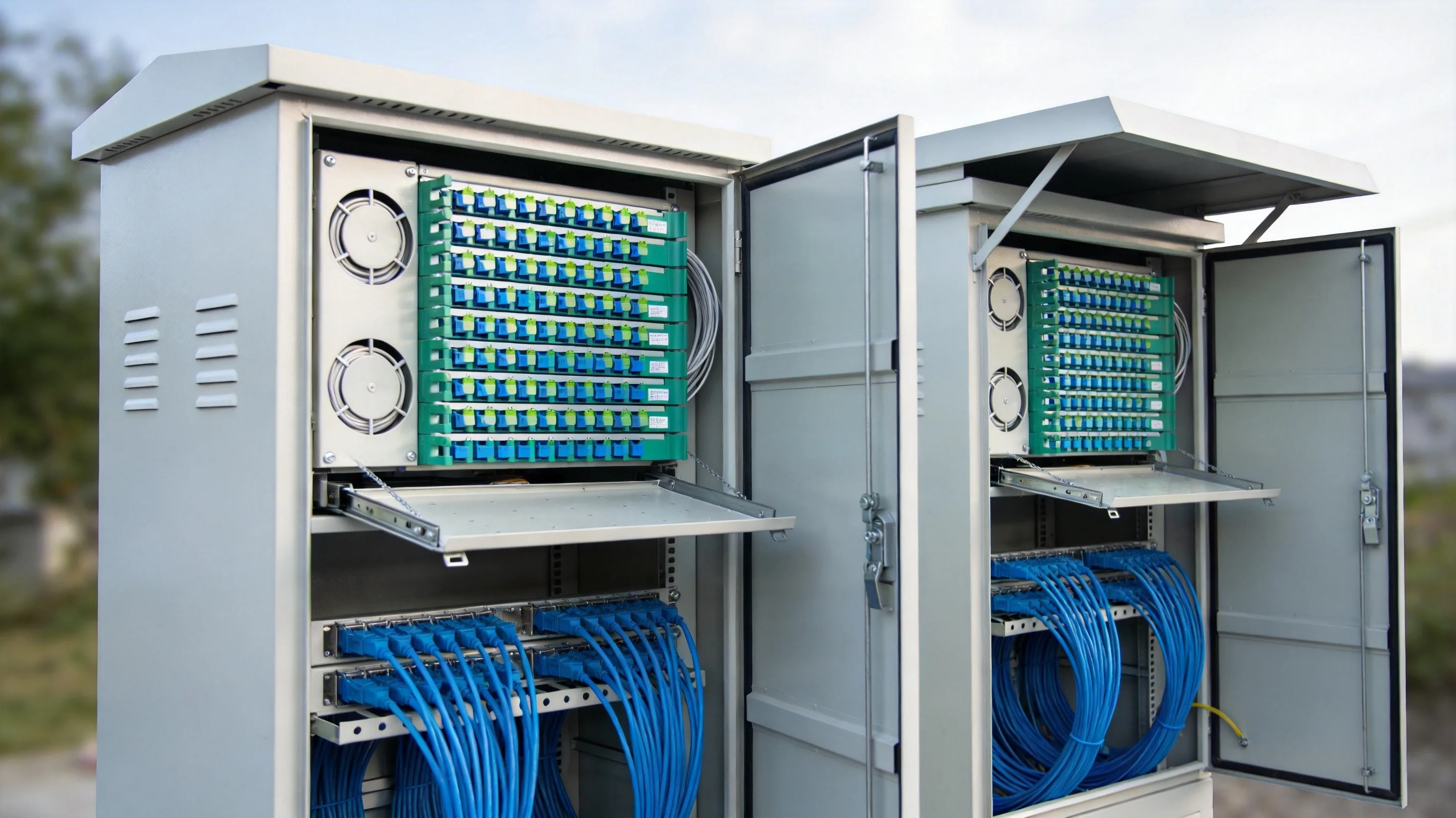
IP55 vs IP65 for Outdoor Fiber Cabinets
Dust protection, water resistance, and how to choose the right rating.
Read Article →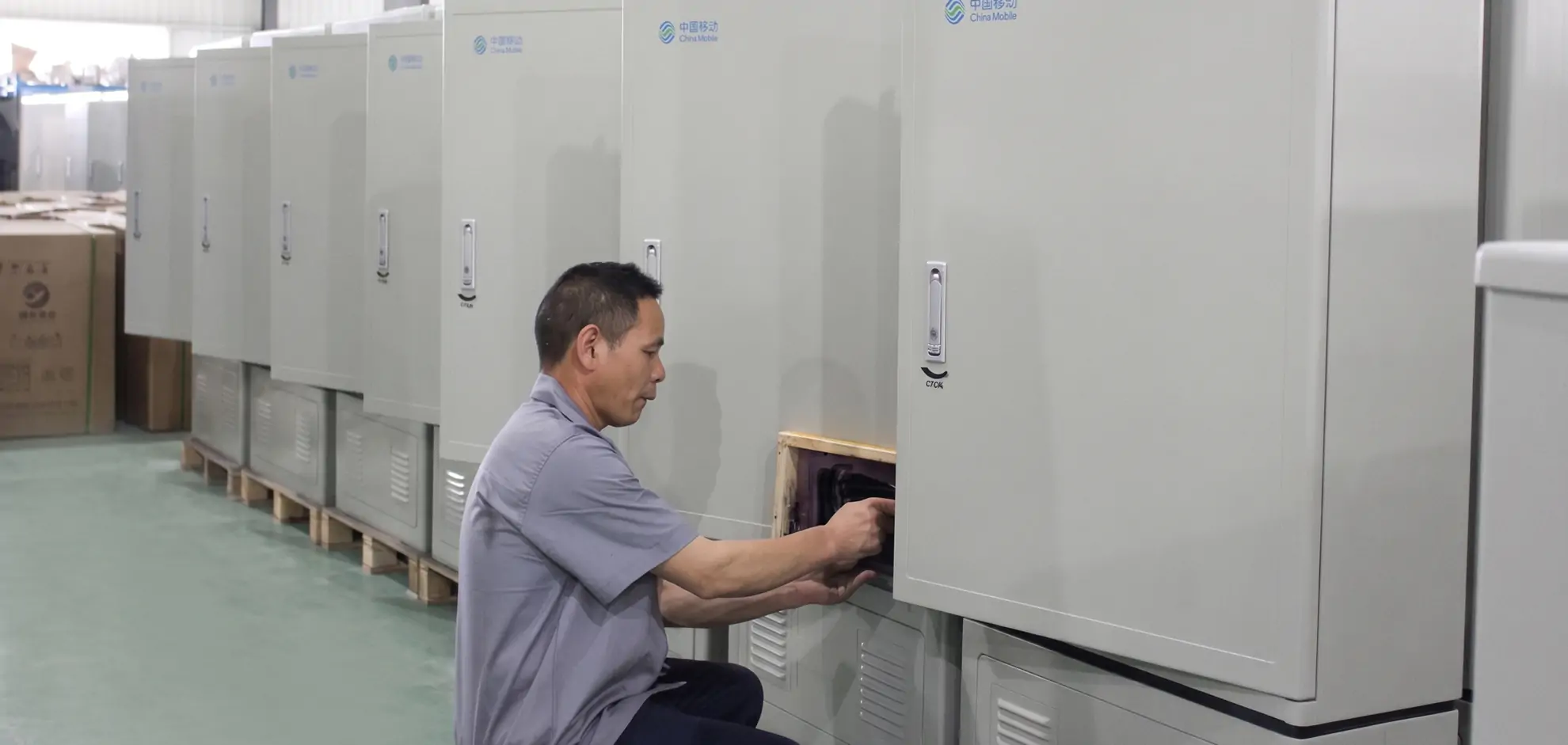
Fiber Distribution Cabinet Buying Guide
Capacity, material, IP rating and mounting for outdoor FDC.
Read Article →