IP55 vs IP65 for Outdoor Fiber Cabinets: What's the Real Difference?
By Jergeo Engineering Team | Published October 2026 · 7 min read
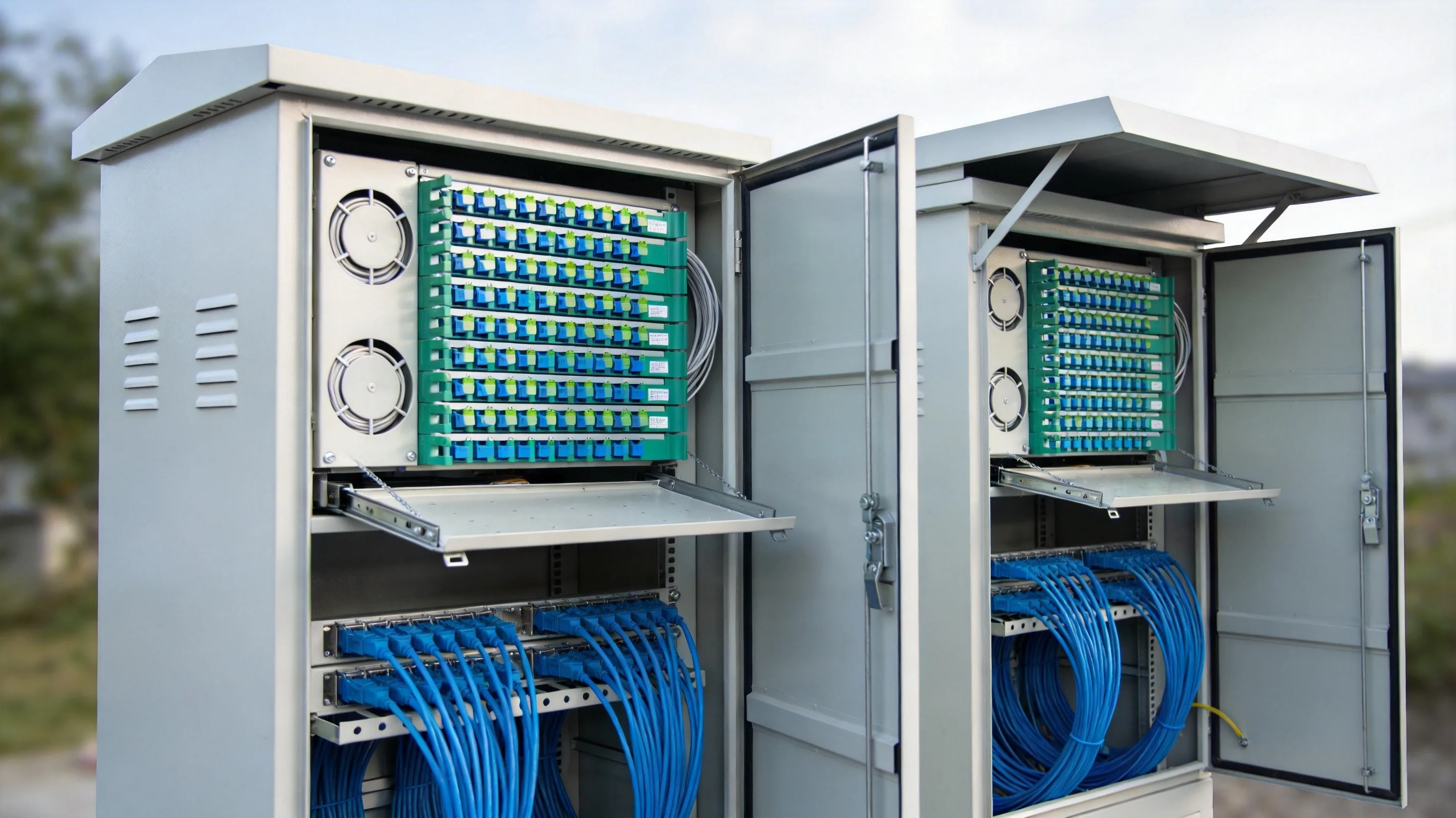
If you are sourcing outdoor fiber distribution cabinets, you have probably seen IP55 and IP65 listed as the two main protection options. The numbers look close — one digit apart — but the real-world difference between them determines whether your fiber network runs for 20 years without a maintenance visit, or needs repeated truck rolls to fix moisture and dust failures. This guide breaks down exactly what each rating means, where each one is appropriate, and how to make the right call for your deployment.
Summary
IP55 and IP65 both resist low-pressure water jets, but differ critically on dust: IP65 is completely dust-tight while IP55 allows limited ingress. For fully exposed outdoor fiber deployments, IP65 prevents connector contamination and corrosion that cause the most expensive field failures. IP55 is a cost-effective choice for sheltered or semi-protected installations where direct rain and fine dust are not constant threats.
How the IP rating system works
The IP (Ingress Protection) code is defined by the IEC 60529 standard. It uses two digits to describe what a sealed enclosure can keep out:
- First digit (solid particle protection): Ranges from 0 (no protection) to 6 (completely dust-tight). This is where IP55 and IP65 diverge.
- Second digit (liquid protection): Ranges from 0 (no protection) to 9K (high-pressure, high-temperature washdowns). Both IP55 and IP65 carry a "5" here.
The single-digit difference in the first position — 5 vs 6 — is what separates a cabinet that handles most outdoor conditions from one that handles all of them, including fine airborne dust that accumulates over years.
What IP55 actually protects against
An IP55-rated enclosure provides:
- Dust protection (level 5): Dust may enter in small quantities, but not enough to interfere with normal operation of the equipment inside. This is "dust-protected" — not dust-tight.
- Water protection (level 5): Protected against low-pressure water jets (6.3mm nozzle, 12.5 L/min) from any direction. Think garden hose spray, not fire hose.
In practice, IP55 works well for environments where the enclosure is sheltered — under building eaves, inside a ventilated street cabinet, or on a wall that does not face prevailing wind and rain directly. The limited dust ingress is not a concern in clean or moderate environments.
What IP65 actually protects against
An IP65-rated enclosure provides:
- Dust protection (level 6): Completely dust-tight. No dust or particulate of any size can enter the enclosure, even under sustained exposure. This is the highest level of solid particle protection in the IP system.
- Water protection (level 5): Same as IP55 — protected against low-pressure water jets from any direction. The water test is identical, but the sealing required to achieve dust-tightness (level 6) means the gaskets and seams are inherently more robust.
For fiber optic equipment, the dust-tight seal is the critical advantage. Fine dust particles that accumulate on fiber connector end faces cause insertion loss increases and signal degradation — one of the most common and expensive field failures in outdoor fiber networks, as documented in IEC 61300-3-35 fiber optic connector inspection standards.
Side-by-side comparison
| Feature | IP55 | IP65 |
|---|---|---|
| Dust protection | Limited — some ingress allowed | Complete — fully dust-tight |
| Water protection | Low-pressure jets from any direction | Low-pressure jets from any direction |
| Sealing quality | Standard gaskets | Premium gaskets, tighter tolerances |
| Typical material | Galvanized steel, coated steel | SMC, 304 stainless steel, aluminum |
| Cost | Lower — simpler sealing | Higher — precision sealing required |
| Maintenance frequency | More frequent in harsh environments | Less frequent, longer service intervals |
| Best for | Sheltered outdoor, indoor-humid | Fully exposed outdoor, coastal, industrial |
When IP55 is the right choice
IP55 is not "inferior" — it is the right engineering choice for specific installation environments. Choose IP55 when:
- The cabinet is under a roof overhang or canopy — direct rainfall is blocked, and dust exposure is moderate.
- Installation is inside a ventilated kiosk or shelter — the outer structure provides first-line weather protection.
- The environment is clean to moderate — no fine industrial dust, no sand, no construction debris.
- Budget is constrained — IP55 enclosures typically cost 20-30% less than equivalent IP65 units, which matters in large-scale deployments with hundreds of nodes.
- Maintenance access is easy and inexpensive — if periodic cleaning and inspection are straightforward, the lower rating is manageable.
Jergeo's JOC-A and JOC-B outdoor telecom cabinets are rated IP55 and serve exactly these scenarios — sheltered telecom nodes, indoor distribution points, and budget-conscious rural deployments.
When IP65 is non-negotiable
Some environments demand the full dust-tight and water-resistant protection of IP65. The extra cost is justified — and often recovered quickly — when:
- Fully exposed outdoor installation — poles, rooftops, open walls facing prevailing weather. No overhang, no shelter.
- Coastal or marine environments — salt spray accelerates corrosion of both metal components and fiber connectors.
- Desert or arid regions — fine sand and dust are constant threats to optical surfaces.
- Industrial areas with airborne particulates — cement plants, mining operations, woodworking facilities.
- Remote or high-cost maintenance locations — when a truck roll costs hundreds of dollars, preventing failures is far cheaper than repairing them.
- Long design life targets — if the network is designed for 20+ years without major equipment replacement, IP65 gives the best chance of achieving that target.
All Jergeo JFDC series fiber distribution cabinets — from the 72-port JFDC-288A to the 1152-port JFDC-1152A — are rated IP65 with SMC or 304 stainless steel construction, making them suitable for the most demanding outdoor environments.
What happens when you choose the wrong rating
The consequences of under-specifying IP protection are cumulative and expensive:
- Connector contamination: Dust on fiber end faces increases insertion loss. What starts as 0.1 dB excess loss gradually worsens until the link fails error-rate thresholds.
- Corrosion: Moisture ingress corrodes metal splice tray components, adapter housings, and cable glands. Once corrosion starts, it accelerates — especially in coastal salt environments.
- Condensation cycles: Daily temperature swings cause repeated condensation and evaporation inside the enclosure. Each cycle deposits contaminants on optical surfaces.
- Intermittent failures: The hardest problems to diagnose. A connector that works in the afternoon but fails at dawn (when condensation is heaviest) creates troubleshooting nightmares.
These are not theoretical risks. They are the most common root causes of field failures in outdoor fiber networks — and they are almost entirely preventable with the correct IP rating from the start.
Quick decision guide
| Your installation site | Recommended rating | Jergeo product line |
|---|---|---|
| Under roof overhang or canopy | IP55 | JOC-A / JOC-B |
| Inside ventilated kiosk | IP55 | JOC-A / JOC-B |
| Indoor humid environment | IP55 | JOC-A / JOC-B |
| Fully exposed outdoor wall | IP65 | JFDC series |
| Pole or rooftop mount | IP65 | JFDC series |
| Coastal or marine | IP65 (304 SS) | JFDC series (SS variants) |
| Desert or heavy dust | IP65 | JFDC series |
Key takeaway
The difference between IP55 and IP65 comes down to one thing: dust. Both resist water equally. But for outdoor fiber cabinets, dust-tight protection (IP65) is what separates a 20-year maintenance-free installation from a recurring problem. Match the rating to your actual environment — not to the highest number available — and you will get the best balance of reliability and cost.
Related Products
JFDC-288A Fiber Distribution Cabinet
288-port IP65 SMC cabinet for demanding outdoor deployments
View Product →
JOC-A Outdoor Telecom Cabinet
IP55 galvanized steel cabinet for sheltered telecom nodes
View Product → Outdoor Cabinet Range
All Jergeo outdoor cabinets — IP55 and IP65 options
View Category →Related categories
Related Articles
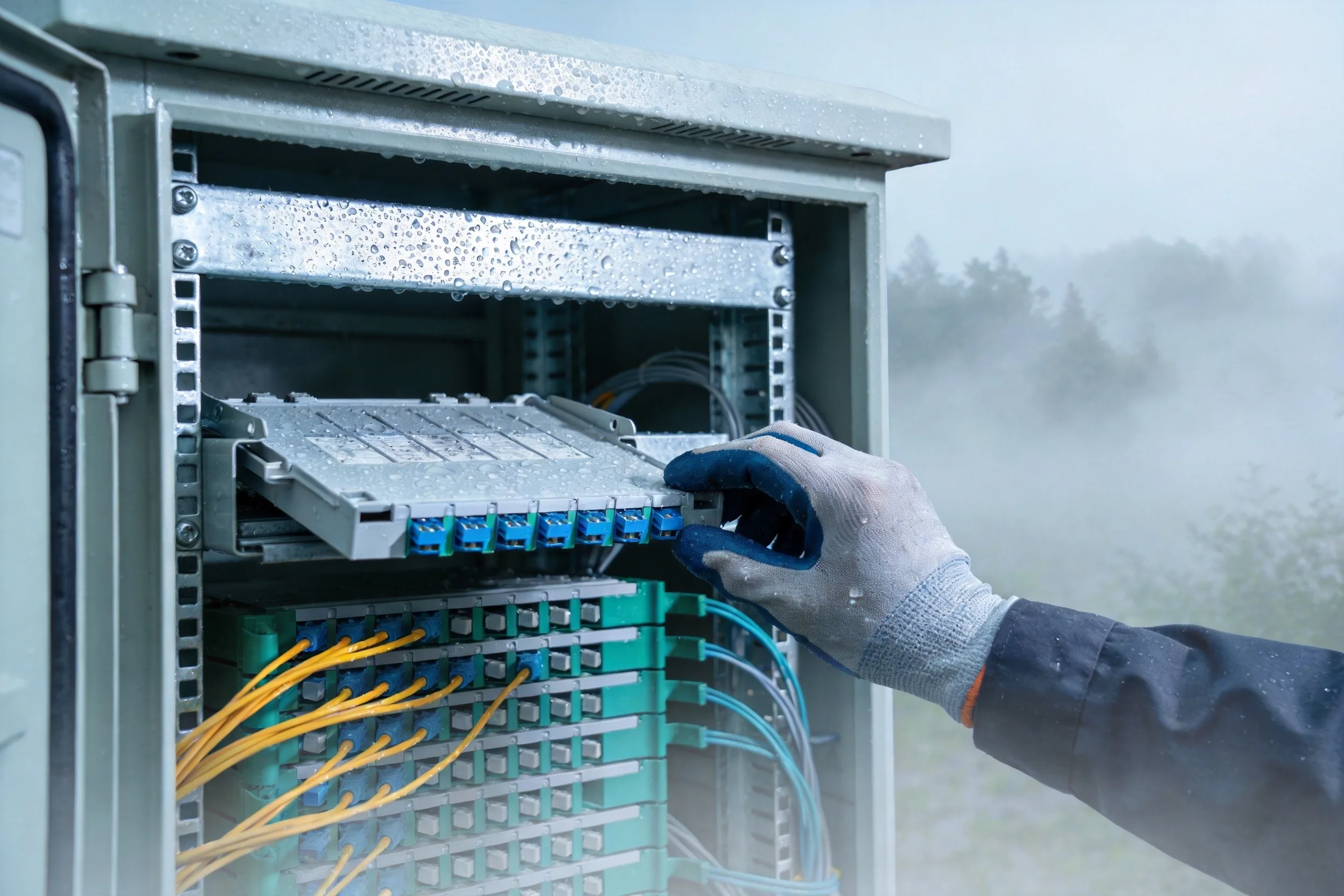
Fiber Distribution Cabinet Condensation: Why It Happens & How to Stop It
Why moisture forms inside outdoor cabinets and the practical fixes to prevent it.
Read Article →
Fiber Distribution Cabinet Buying Guide
Capacity, material, IP rating and mounting for outdoor FDC.
Read Article →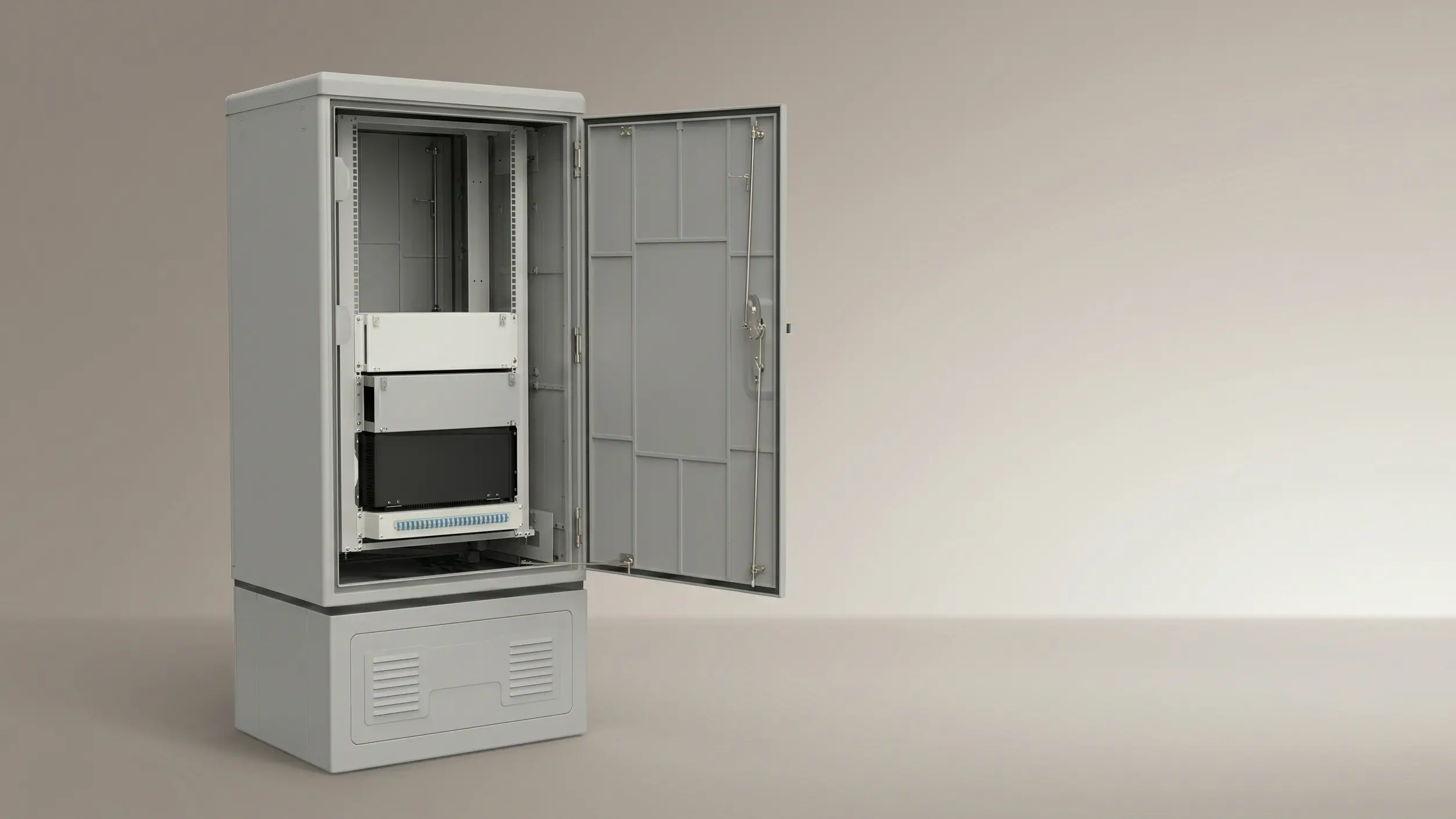
Outdoor Telecom Cabinet Selection Guide
How to choose the right telecom cabinet for your network.
Read Article →