TL;DR
A high density fiber patch panel packs 48-144 fibers per 1U using LC duplex adapters or MPO/MTP parallel-optics connectors, versus 12-24 for a standard panel. It is essential when rack space is scarce — data centers, colocation, and AI clusters — but demands careful cable management. Choose a modular chassis so you can scale density as fiber demand grows, and match MPO breakout to the parallel optics your switches and GPUs use.
High Density Fiber Patch Panel: How to Spec One That Stays Maintainable
By Jergeo Engineering Team | Updated October 2026 · 8 min read
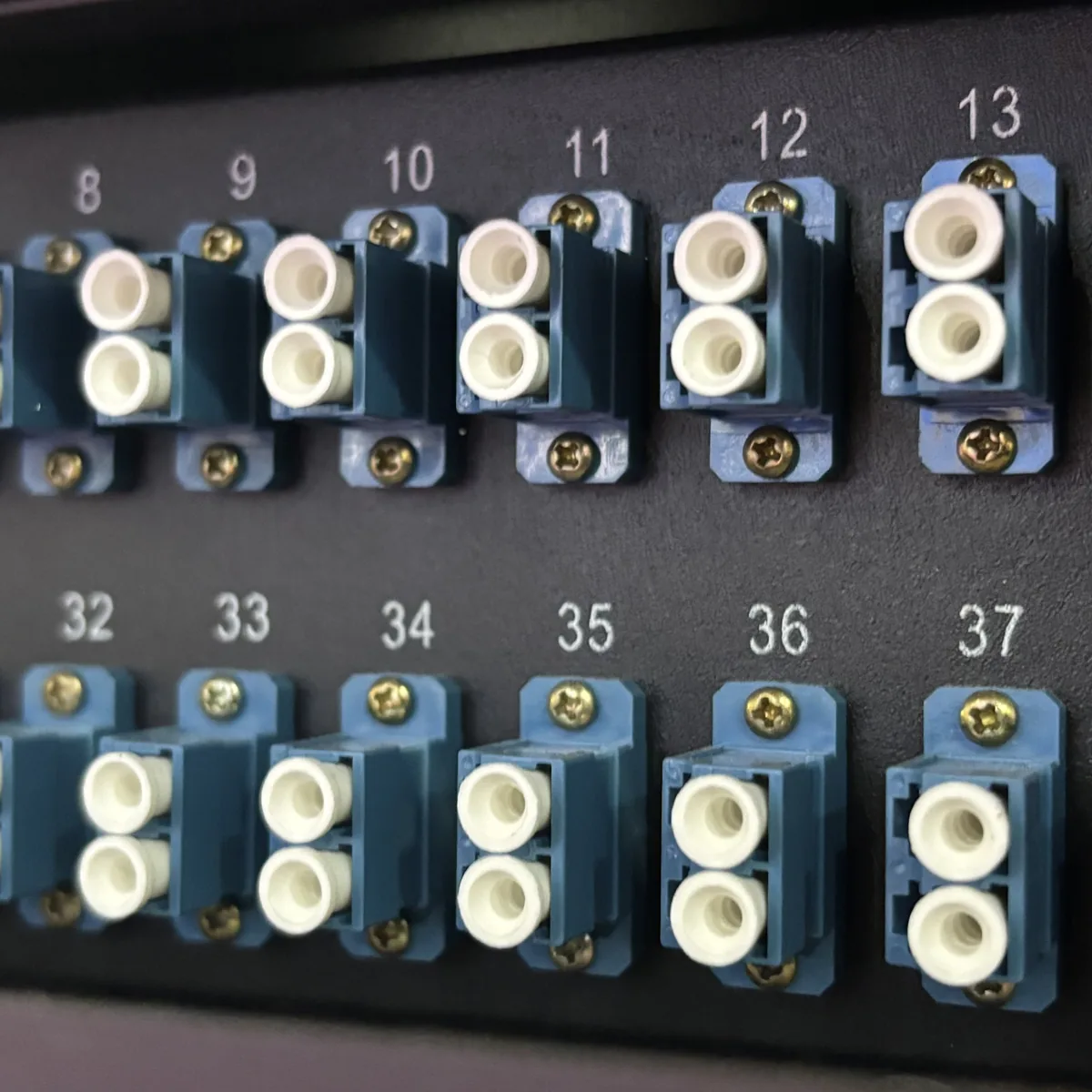
As fiber counts climb in data centers and AI clusters, rack space becomes the scarce resource. A high density fiber patch panel is the answer: it packs more adapter ports into the same 1U or 2U than a standard panel, so you can terminate hundreds of fibers without buying more racks.
Summary
A high density fiber patch panel fits 48-144 fibers per 1U with LC duplex or MPO/MTP connectors, essential when rack space is scarce in data centers and AI clusters. The trade-off is cable management, so choose a modular chassis, match MPO breakout to your optics, and keep slack storage and labeling disciplined.
The density is not free — more ports in less space means tighter cable management, stricter bend-radius discipline, and more care when technicians trace a single fiber. This guide covers what makes a high density fiber patch panel work, when it is worth the extra complexity, and how to spec one that stays maintainable.
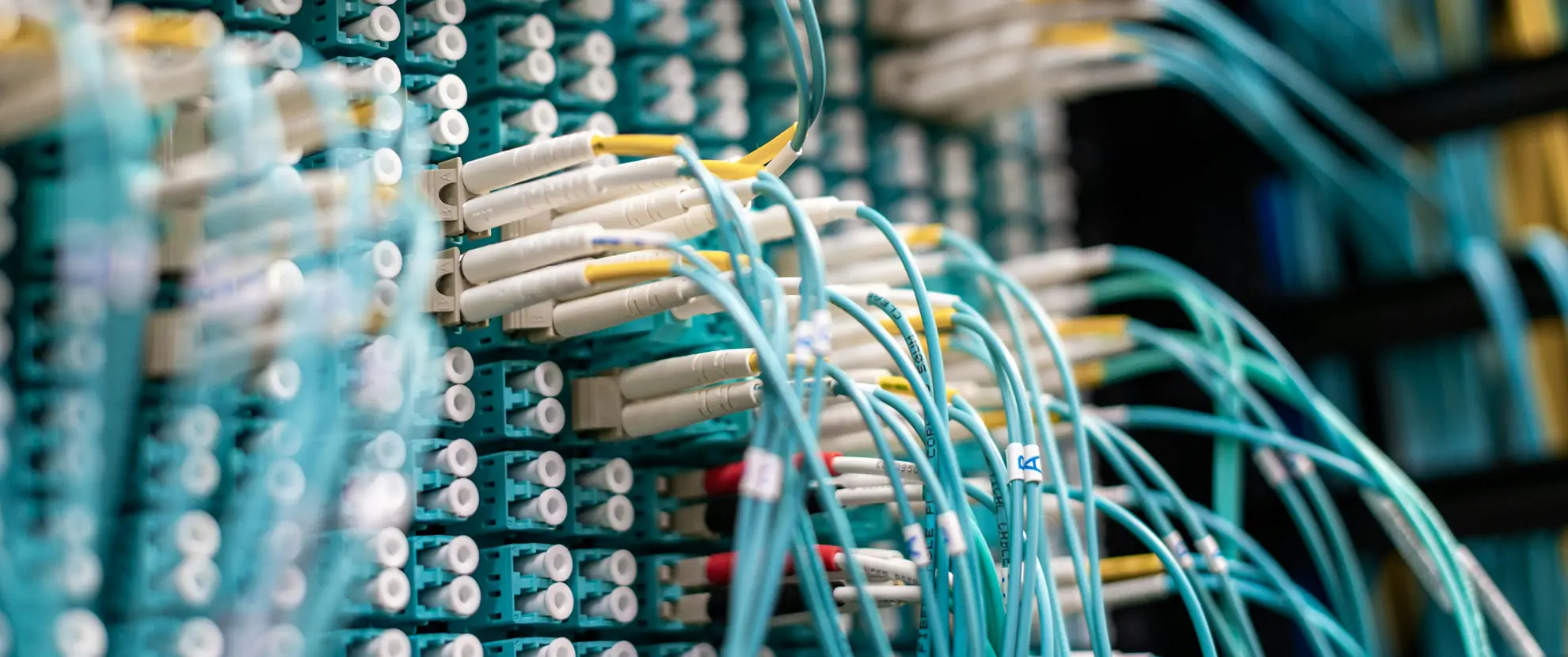
A high density fiber patch panel typically fits 48-144 fibers per 1U using small-form-factor adapters (LC duplex) or MPO/MTP parallel-optics connectors. Standard panels hold 12-24 fibers per 1U. That three-to-ten-fold jump is what makes the difference between a tidy rack and a warehouse-full of low-density panels.
What drives the need for density
Fiber counts are climbing for a few concrete reasons:
- Higher port rates: 400G and 800G switches need many more fibers per uplink than 10G did, so the same logical network terminates far more cables.
- GPUs and parallel optics: AI clusters use MPO-based parallel optics on the leaf-spine fabric, each GPU host pulling 4-8 or more fibers, concentrated in a small rack area.
- Colocation cost: floor and rack space is billed per unit, so operators pack as much fiber into each rack as practical.
When these apply, a standard-density panel becomes the wrong tool — you would burn whole racks on low port counts. This is where the high density fiber patch panel earns its keep.
LC duplex vs MPO: the two routes to density
There are two main ways to raise port density, and they suit different deployments.
| Route | Typical 1U density | Best for |
|---|---|---|
| LC duplex, standard layout | 24 ports / 48 fibers | Enterprise, 10G/25G |
| LC duplex, offset/rotated | 48-72 ports / 96-144 fibers | Data center, high-density LC |
| MPO/MTP | 12-24 connectors, breakout 144-288 fibers | AI clusters, 40G-800G parallel optics |
LC duplex high density keeps your existing LC patch cords and transceivers; density comes from tighter adapter layout and cassette designs. It is the straightforward upgrade from a standard panel.
MPO/MTP is the density champion. One MPO connector carries 12-24 fibers, so a single high density fiber patch panel can break out to hundreds of fibers. It pairs with parallel optics on 40G-800G links and is the default for AI-scale fabrics, but it needs specialized adapter polarity management and inspection tools. See our MPO vs LC comparison for how to choose.
Port count math for a high density fiber patch panel
Right-size the count so you do not over-build or hit a wall in a year. The calculation mirrors standard panel sizing but worth re-stating for high density:
Ports needed = (fiber count per host × number of hosts) + spare
For an AI leaf rack with 8 GPUs at 8 fibers each, that is 64 fibers; add 20% spare for 77, round to a panel configuration. MPO breakout math: 77 fibers needs 4 MPO-24 connectors with 19 spare — comfortable headroom.
- Standard LC: 24/48 ports per 1U, for racks with modest fiber counts.
- High-density LC: 48-72 ports per 1U, for fiber-dense but LC-based data centers.
- MPO: breakout to 144-288 fibers per 1U, for parallel-optics AI clusters.
The maintenance trade-off you must plan for
Density compresses everything — including the room to work. Plan these or a high density fiber patch panel becomes a liability:
- Slack storage: keep at least one full service loop per fiber group for future re-termination.
- Bend-radius protection: more patch cords in less space raises the risk of micro-bends; use radius limiters and routing guides.
- Labeling: with hundreds of fibers in one panel, tracing a single link without disciplined labels is a nightmare. Label adapters, fibers, and breakout bundles.
- Access: front-accessible trays and slide-out designs make ongoing maintenance far easier than a fixed panel buried in cables. A sliding chassis like the JODF-U3 helps.
Why AI data centers standardized on high density
AI clusters are the clearest driver of the shift to MPO/MTP high-density panels. A single GPU pod can need thousands of fibers, and the leaf-spine fabric runs on bandwidth that only parallel optics can reach. High density fiber patch panels let operators terminate and organize that fiber in a fraction of the rack space a standard panel would need. For a deeper look at why fiber density exploded in AI-scale networks, read our analysis of AI data center fiber management.
Start standard, scale to high density
The smartest approach is often to buy a modular chassis now and scale density as demand grows. A panel that accepts interchangeable adapter plates or cassettes lets you start at standard density, then swap in high-density LC plates or MPO cassettes in the same chassis later — no rip-and-replace. This is exactly how the Jergeo JODF series works: one chassis, modular adapter plates, so your density can grow with your fiber count.
Related Products
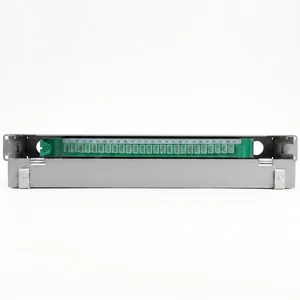
JODF-U1 Optical Patch Panel
12-144 ports, modular adapter plates, scale density as needed
View Product →
JODF-U3A Fiber Patch Panel
24-96 ports, sliding tray for high-density cable management
View Product →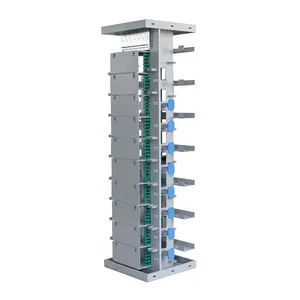
JODF-A1 Optical Distribution Frame
720 ports ODF for data center backbone termination
View Product →Related Articles
Fiber Optic Patch Panel Guide
Port count, connector types, and density options when selecting a patch panel.
Read Article →
MPO vs LC Patch Panel
High-density MPO vs LC adapter configurations for data center patch panels.
Read Article →
AI Data Center Fiber Management
Why AI clusters drive high-density fiber management and MPO adoption.
Read Article →References
Key takeaway
Use a high density fiber patch panel when rack space is the binding constraint — data centers, colocation, and AI clusters. LC duplex high density suits fiber-dense LC-based racks; MPO/MTP is the density champion for parallel optics at AI scale. Choose a modular chassis, plan slack and bend-radius, and label aggressively to keep it maintainable.
Related products