Fiber Splice Tray Selection Guide: Capacity, Material & Bend Radius
By Jergeo Engineering Team | Published October 2026 · 8 min read

A splice tray may look like a simple plastic rectangle, but picking the wrong one causes some of the most frustrating field problems in optical networking — tangled fibers, broken splices, high insertion loss, and hours of rework every time a cabinet is serviced. The tray is the small layer that decides whether your spliced fiber network stays clean and maintainable for 20 years or degrades into a mess. This guide tells you exactly what to check when selecting a splice tray: core capacity, material, bend radius, and fit.
Summary
A fiber splice tray organizes and protects fusion splices inside cabinets, closures, and boxes. Key selection factors are core capacity (commonly 12, 24, 32, 48 or 96 splices per tray), material (ABS for economy, PC for higher heat resistance), bend radius protection, and physical fit with your enclosure's tray slots. The 24-core tray is the industry default, balancing density with technician access. Match tray core count to your enclosure, and verify the tray maintains the minimum bend radius to avoid micro-bends and high loss.
What a splice tray does, and why it matters
A fiber splice tray keeps every fusion splice organized, protected, and accessible. When a technician fuses two fibers, the splice point is fragile and must be held without stress, while the fiber on each side must be routed without sharp bends. The tray provides:
- Splice protection: Each splice sleeve (and often its fiber) sits in a dedicated channel, so splices are not crushed or bent by other cables.
- Bend radius control: Well-designed trays hold fibers to the manufacturer's minimum bend radius, preventing micro-bends that quietly degrade signal quality.
- Slack management: Excess fiber is coiled neatly, so re-splicing or re-entering a closure is possible without tangling.
- Identification: Trays with labeled slots make it easy for technicians to find and rework a specific splice.
This is why splice tray selection directly affects your long-term maintenance cost — a task covered in practical detail in our guide to installing splice trays in a fiber distribution cabinet.
Core capacity: how many splices per tray
Core capacity is the first and most visible spec. It tells you how many fiber splices one tray holds. The right count is a balance between density and maintainability.
| Core Count | Typical Use | Trade-off |
|---|---|---|
| 12 cores | Small closures, simple drops | Easiest to access, low density |
| 24 cores | Industry default for most FTTH | Best density-to-access balance |
| 32 / 48 cores | Mid-size closures and cabinets | Higher density, slightly less access |
| 96 cores | High-density backbone closures | Max density, most complex to rework |
For most FTTH distribution work, a 24-core tray is the sweet spot. It holds enough splices to be economical while keeping each splice accessible. Pick higher counts only when your enclosure or closure is designed for high-density trays and your technicians are comfortable reworking dense layouts.
Material: ABS vs PC
Splice trays are almost always plastic, and the two common materials are ABS and polycarbonate (PC):
- ABS: Economical and widely used. Excellent for typical indoor and many outdoor applications where temperature ranges are moderate. It is the default for most standard trays.
- Polycarbonate (PC): Higher heat resistance and rigidity than ABS. Preferred where trays may be exposed to elevated temperatures (e.g., hot climate cabinets) or need extra structural strength to resist warping over years of thermal cycling.
For harsh or hot environments, choose PC or a reinforced ABS blend. Material choice is a reliability factor that is easy to overlook but matters for the tray's lifetime in outdoor installations.
Bend radius and fiber organization
The bend radius is arguably the most important engineering detail of a splice tray, because violating it causes micro-bends that increase attenuation — often invisibly during installation, only to surface later as intermittent failures. A good tray:
- Keeps coiled slack above the fiber's minimum bend radius (typically 30mm for standard fiber).
- Provides rounded routing guides so no sharp edge or corner touches the fiber.
- Separates the input/output fiber paths from the coil to avoid crossed, stressed fibers.
When comparing trays, check the internal geometry — not just the core count. Two trays can both claim the same capacity, yet one keeps fibers safely curved while the other tempts technicians into tight bends.
Fit and compatibility with your enclosure
A splice tray is only useful if it fits the enclosure it lives in. Fiber distribution cabinets, closures, and termination boxes each accept specific tray types and slot widths. Before selecting, confirm:
- Tray dimensions match the enclosure's tray compartment or slot.
- Mounting — screw holes, snap-in, or slide-in — matches the cabinet's rails or brackets.
- Stacking — how many trays the enclosure holds, and whether they swing or slide out for access (drawer-style trays are easier to service).
This compatibility is where selection mistakes surface. A cheaper, well-built tray that does not fit your cabinet forces field modification. Standard sourcing from a factory that can match your enclosure's tray standard, as explained in our fiber splice closure installation guide and the splice closure reference, saves you these mismatches.
A quick selection checklist
- Confirm the core count your enclosure and closure are designed for — 24-core is the safe default.
- Choose ABS for standard use, PC for hot or harsh environments.
- Verify bend radius protection and fiber routing, not just capacity.
- Match tray dimensions and mounting to your specific cabinet, closure, or box model.
- Prefer drawer-style or swing-out trays where maintenance frequency is high.
Need splice trays matched to your enclosure?
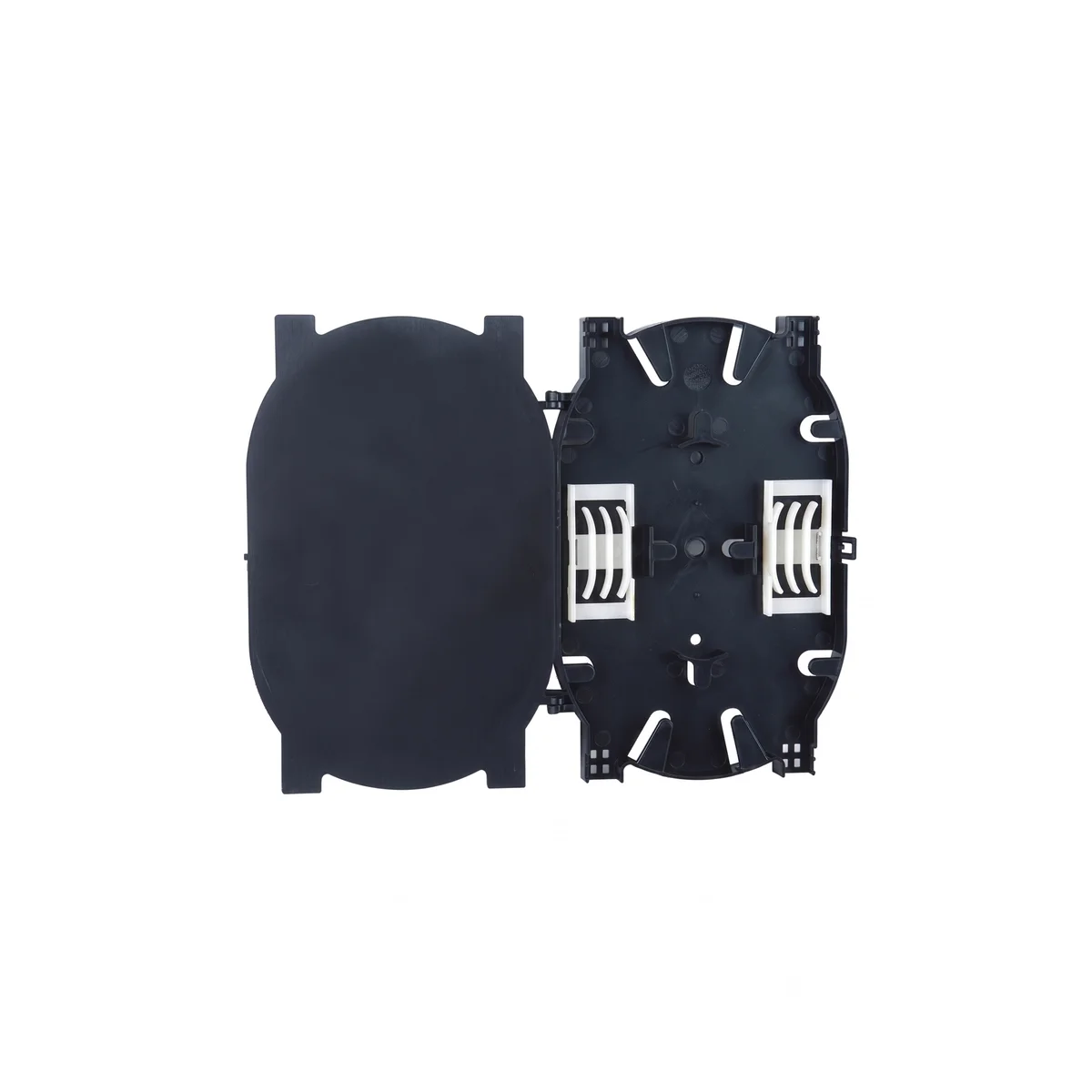
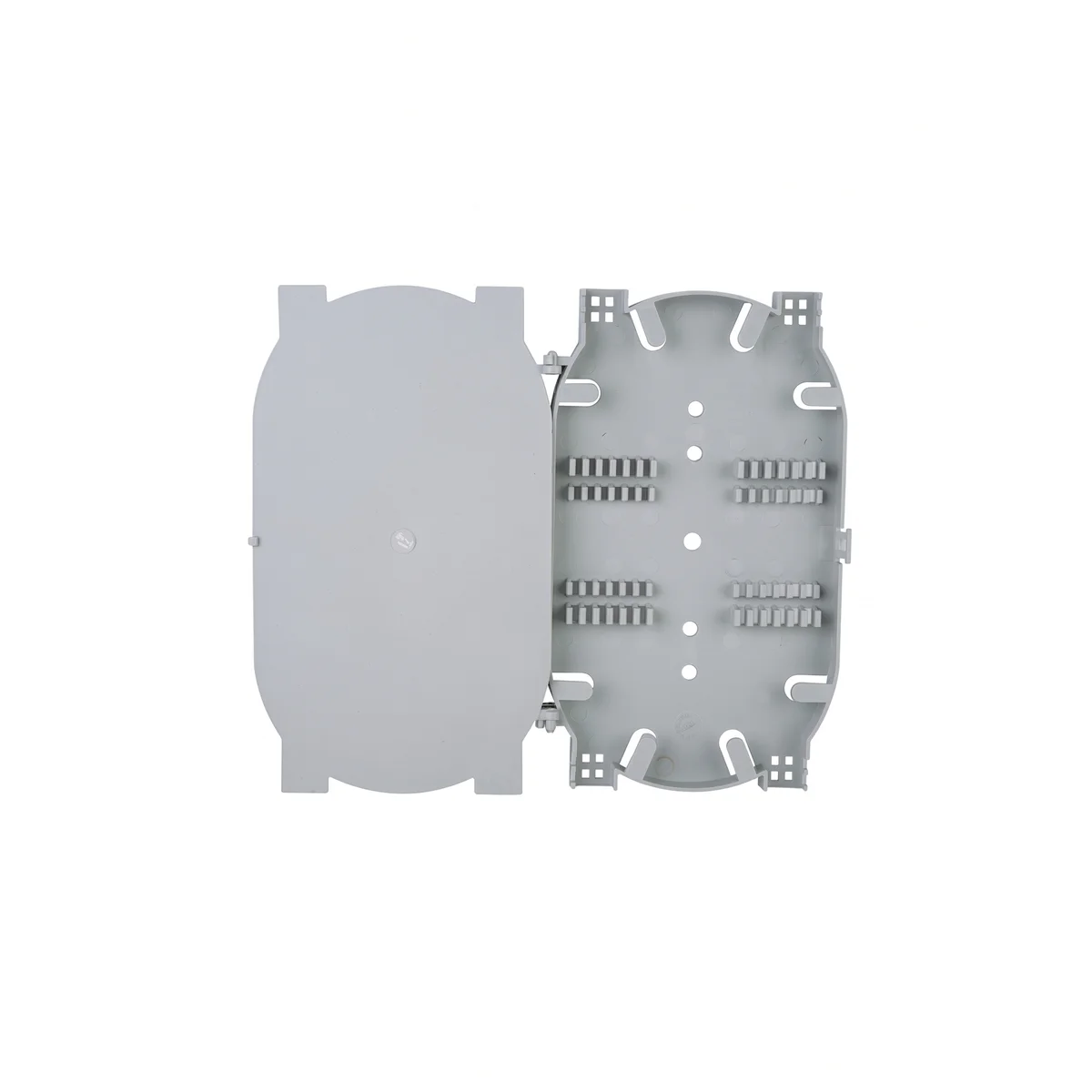
Jergeo is a factory-direct manufacturer of the JST series of splice trays, available in multiple core counts for fiber distribution cabinets, closures, and termination boxes. As a manufacturer we can match tray dimensions and mounting to your enclosure standard. We support OEM/ODM, MOQ from 1 unit, 1-hour response, and video inspection before shipment — tell us your core count and enclosure model.
Related Products
Related categories
Related Articles
How to Install Splice Trays in an FDC
Step-by-step splice tray installation for cabinets.
Read Article →
Fiber Splice Closure Installation
Installing splices and trays in a splice closure.
Read Article →
Fiber Optic Splice Closure Guide
The complete reference on fiber splice closures.
Read Article →