Fiber Optic Enclosure Guide: How to Choose the Right Type for Your ODN Network
By Jergeo Engineering Team | Updated October 2026 · 11 min read
Every fiber network eventually needs a place to put the fibers down. That place is a fiber optic enclosure — the outdoor or wall-mounted box that holds the splice trays, PLC splitters, adapters, pigtails and slack fiber at a distribution point. It is where feeder cable meets drop cable. It is where one fiber becomes eight, sixteen, or thirty-two. And it is the most under-planned piece of equipment in most ODN deployments.
We are a factory that builds fiber optic enclosures — fiber distribution cabinets, distribution boxes, optical terminal boxes and splice closures — and ships them to deployments in more than thirty countries. Over the years we have watched the same pattern repeat: teams focus every decision on splitters and fiber counts, then treat the enclosure as an afterthought. That is backwards. The enclosure protects every fiber and splitter inside it, and a bad enclosure choice shows up as signal loss, broken trays and truck rolls years before any other component fails.
This guide is how we think about choosing a fiber optic enclosure at Jergeo, based on what we have actually seen work in the field — and what we have seen fail.
Summary
Fiber optic enclosure selection comes down to four decisions: type (FDC for aggregation, FDB/OTB for last-mile drops, splice closure for outdoor joints), capacity (halve your fiber count and you have wasted money, double it and you have wasted space), material (SMC for outdoor, steel for security, ABS for indoor), and IP rating (IP65 minimum for outdoor). Most field problems trace back to choosing the wrong type for the network layer — not to the components inside.
TL;DR
Fiber optic enclosure selection comes down to four decisions: type (FDC for aggregation, FDB/OTB for last-mile drops, splice closure for outdoor joints), capacity (halve your fiber count and you have wasted money, double it and you have wasted space), material (SMC for outdoor, steel for security, ABS for indoor), and IP rating (IP65 minimum for outdoor). Most field problems trace back to choosing the wrong type for the network layer — not to the components inside.
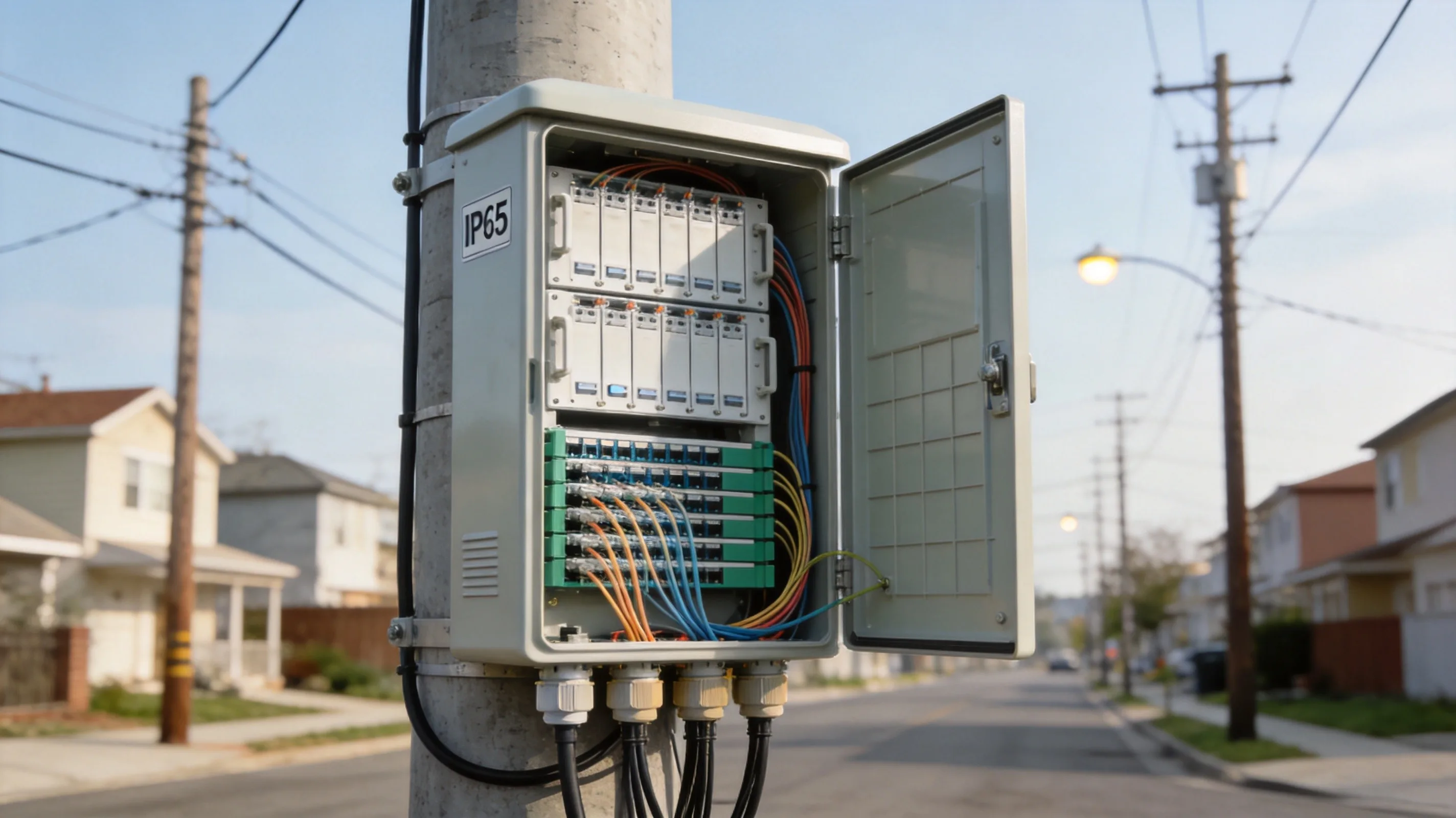
What Is a Fiber Optic Enclosure, Exactly?
A fiber optic enclosure is a passive protective housing that organizes and protects the fiber network components at a distribution or termination point. It is passive — it does not amplify, switch or convert light. It protects and organizes. Inside you will typically find a splice tray (or several), often a PLC splitter, adapter plates, pigtails and bundles of slack fiber coiled to respect the minimum bend radius.
The term "enclosure" is a broad one, which is why it causes so much confusion. In practice, when a network engineer says "fiber optic enclosure" they usually mean one of four specific pieces of hardware depending on where they are in the network:
- Fiber distribution cabinet (FDC) — the big floor-standing or pole-mounted unit that aggregates many feeder cables and serves a whole neighborhood.
- Fiber distribution box (FDB) — the compact box for last-mile FTTH splits, mounted on a wall or pole.
- Optical terminal box (OTB) — a termination point where outside plant fiber meets the subscriber or building drop.
- Fiber splice closure — a sealed outdoor housing that protects fusion splices in the cable run, not at a distribution point.
There is also the indoor rack-mount family — patch panels and ODFs — but those are patching hardware for equipment rooms, not enclosures for distribution. We cover them separately. When you are choosing a fiber optic enclosure, the first question is always which layer of the network it sits in.
The Four Types of Fiber Optic Enclosure and Where Each Belongs
Choosing the wrong type is the most expensive mistake you can make, so it is worth getting crisp about the four families. Here is how we separate them in practice:
| Type | Network Layer | Typical Capacity | Mounting |
|---|---|---|---|
| Fiber Distribution Cabinet (FDC) | Distribution / aggregation | 144 – 576+ fibers | Floor-standing or pole |
| Fiber Distribution Box (FDB) | Last-mile drop | 8 – 96 ports | Wall or pole |
| Optical Terminal Box (OTB) | Termination | 12 – 192 fibers | Wall or pole |
| Fiber Splice Closure | Outdoor cable joint | 12 – 288+ splices | Aerial, manhole, buried |
The rule of thumb: if you are aggregating multiple feeder cables and serving an entire neighborhood, you need an FDC. If you are splitting to a smaller group of subscribers close to the network edge, you need an FDB. If you are terminating outside plant at a building or a single subscriber, you need an OTB. And if you are protecting a splice point out in the cable run — between two lengths of cable, not at a distribution point — you need a splice closure.
We walk through FDC versus FDB versus ODC in more detail in our FDC vs FDH vs ODC comparison, and cover the FDB in depth in our fiber distribution box guide.
Capacity Planning: The Single Most Common Mistake
The most common capacity mistake we see is halving the fiber count. A team works out they need 24 subscribers, orders a 32-port box, and then the building adds a phase with another dozen homes. A year later the box is full and they need a second enclosure, a second mounting point and a second set of cables. Labor cost doubles.
Our recommendation is consistent across every fiber optic enclosure we build: plan for 20–30% headroom, every time. At 24 subscribers choose a 32-port box. At 48, choose 64. The box itself costs 15–25% more one size up, but it eliminates an entire second installation if the network grows.
Capacity also means physical room inside, not just port count. Splice trays need space to stack, and every fiber needs a bending-radius-compliant path. A box that is technically large enough by port count but crammed with trays will suffer microbending loss. When we quote an enclosure we always check both numbers: ports and physical tray area.
Material: SMC vs Steel vs ABS
For outdoor fiber optic enclosures, material is the decision that determines lifespan. The three options, from our factory floor:
- SMC (sheet molding compound) — our default for outdoor. Resists UV, stays rigid in high heat, does not become brittle after 5–7 years of sun. Non-corroding. Best all-round outdoor value.
- Steel — strongest and most secure, but heavy and prone to corrosion unless the coating is maintained. Choose steel when physical security or high wind load matters more than weight.
- ABS / PC+ABS — cheapest and lightest, degrades fastest in direct sun. Right for indoor or semi-protected spots.
If the enclosure faces direct sunlight year-round, use SMC. If it is indoors or under an overhang, ABS saves money with little sacrifice. This is laid out in full in our fiber cabinet materials comparison.
IP Rating: The Number That Decides Outdoor Survivability
IP65 is the minimum for an outdoor fiber optic enclosure. The first digit (6) means dust-tight. The second (5) means protected against water jets from any direction. IP65 handles rain, wind-driven spray and temporary standing water at the base. It does not cover submersion — if the site is flood-prone or below grade, step up to IP67.
Here is the catch most people miss: the IP rating only holds if every cable entry port is sealed with the supplied compression glands. Leave one port open and the effective rating drops to IP54 at best. On every installation we specify that all unused ports get sealed the same day, not "later." Water ingress is the number one cause of premature enclosure failure we see on site.
Five Field Mistakes That Kill a Fiber Optic Enclosure
- Choosing the wrong type. Using an FDB where you need an FDC, or an OTB where you need an FDB. This is the most expensive mistake of all because you cannot fix it without a full re-install.
- Halving the capacity. No headroom means a second enclosure within two years.
- Wrong material for the climate. ABS in direct sun becomes brittle and cracks. SMC in a harsh marine environment is fine; uncoated steel is not.
- Cramming splice trays. A box that is big enough by port count but too tight for tray stacking causes microbending loss.
- Skipping cable seal. Leaving entry ports unsealed drops the IP rating and lets in water.
Choosing the Right Fiber Optic Enclosure: Decision Checklist
- Identify the network layer. Aggregation → FDC. Last-mile split → FDB. Termination → OTB. Outdoor joint → splice closure.
- Count fibers and splitters, add 20–30% headroom. That is your minimum capacity.
- Decide indoor or outdoor. Outdoor → SMC (or steel for security). Indoor/semi-protected → ABS or PC+ABS.
- Pick the IP rating. IP65 standard outdoor, IP67 for flood risk.
- Verify on-site sealing. All entry ports gland-sealed on day one.
Follow that sequence and you eliminate the vast majority of field problems we see. The residual issues are usually about cable management and routing — which is a separate topic covered in our fiber splice closure guide.
Recommended Products
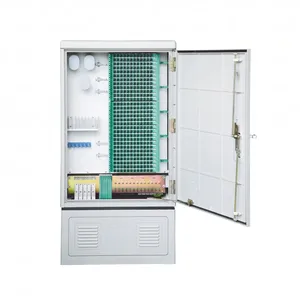
JFDC-288A — Distribution Cabinet
288-fiber FDC for neighborhood aggregation. SMC shell. Floor-standing or pole mount.
View Product →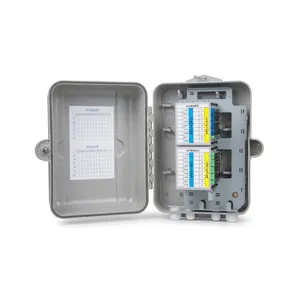
JFDB-64A — Distribution Box
64-port FDB with integrated PLC splitter slots. SMC shell. IP65, wall/pole mount.
View Product →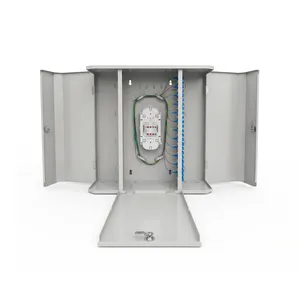
JOTB-192A — Terminal Box
192-core OTB for termination of outside plant. SMC shell. Compact wall-mount design.
View Product →Related Articles
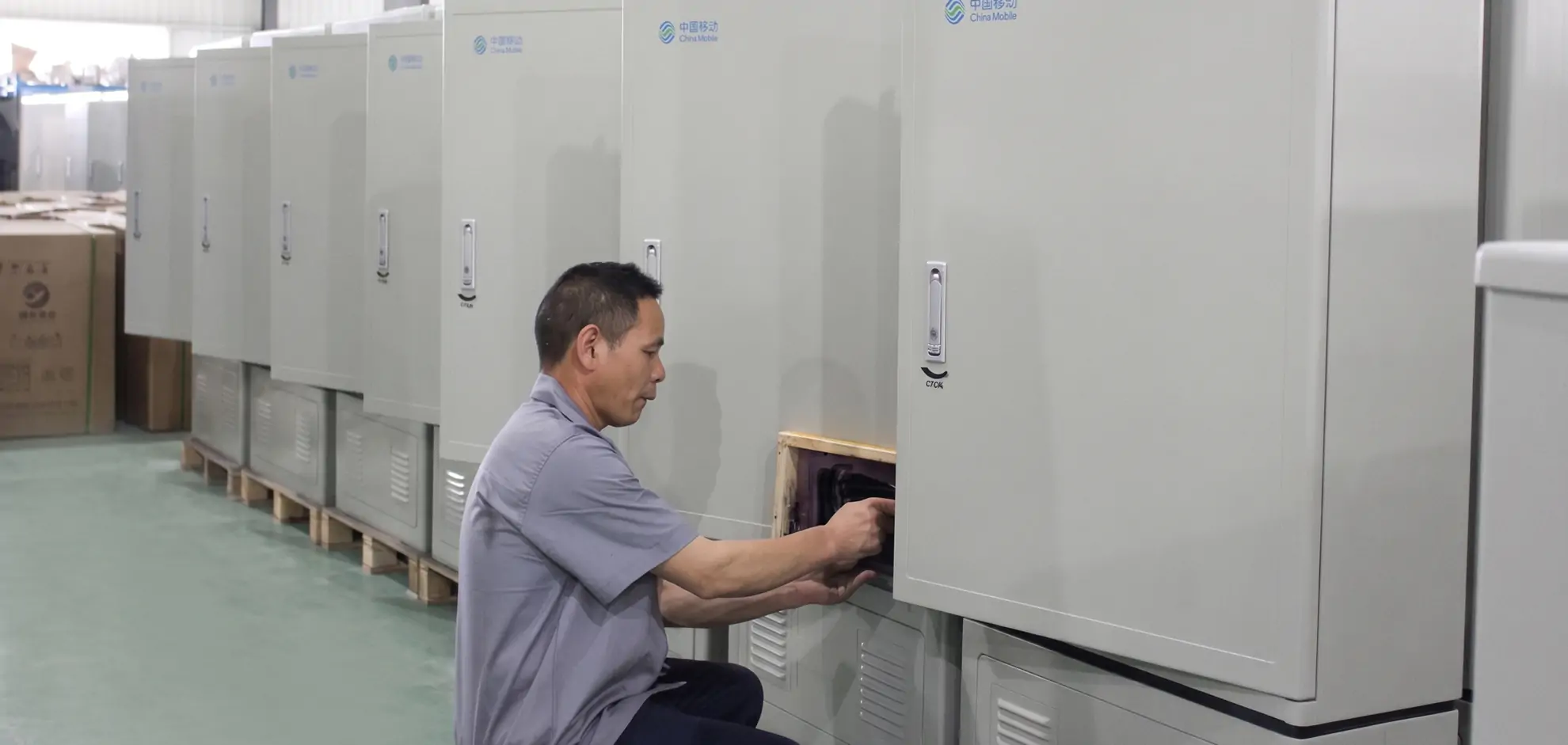
Fiber Distribution Cabinet Buying Guide
Capacity planning, material and IP rating explained for FDC procurement.
Read Article →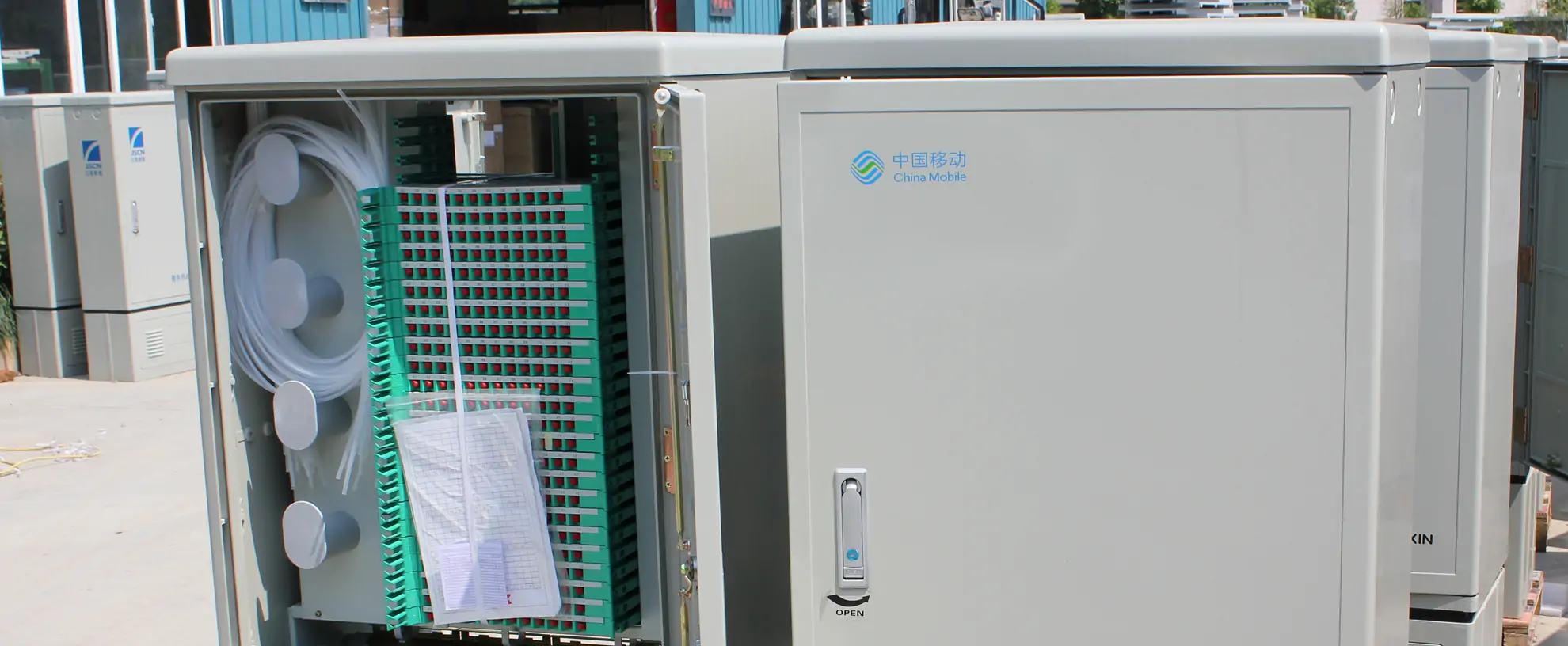
FDC vs FDH vs ODC: Key Differences
Role, capacity and placement of each enclosure in a fiber distribution network.
Read Article →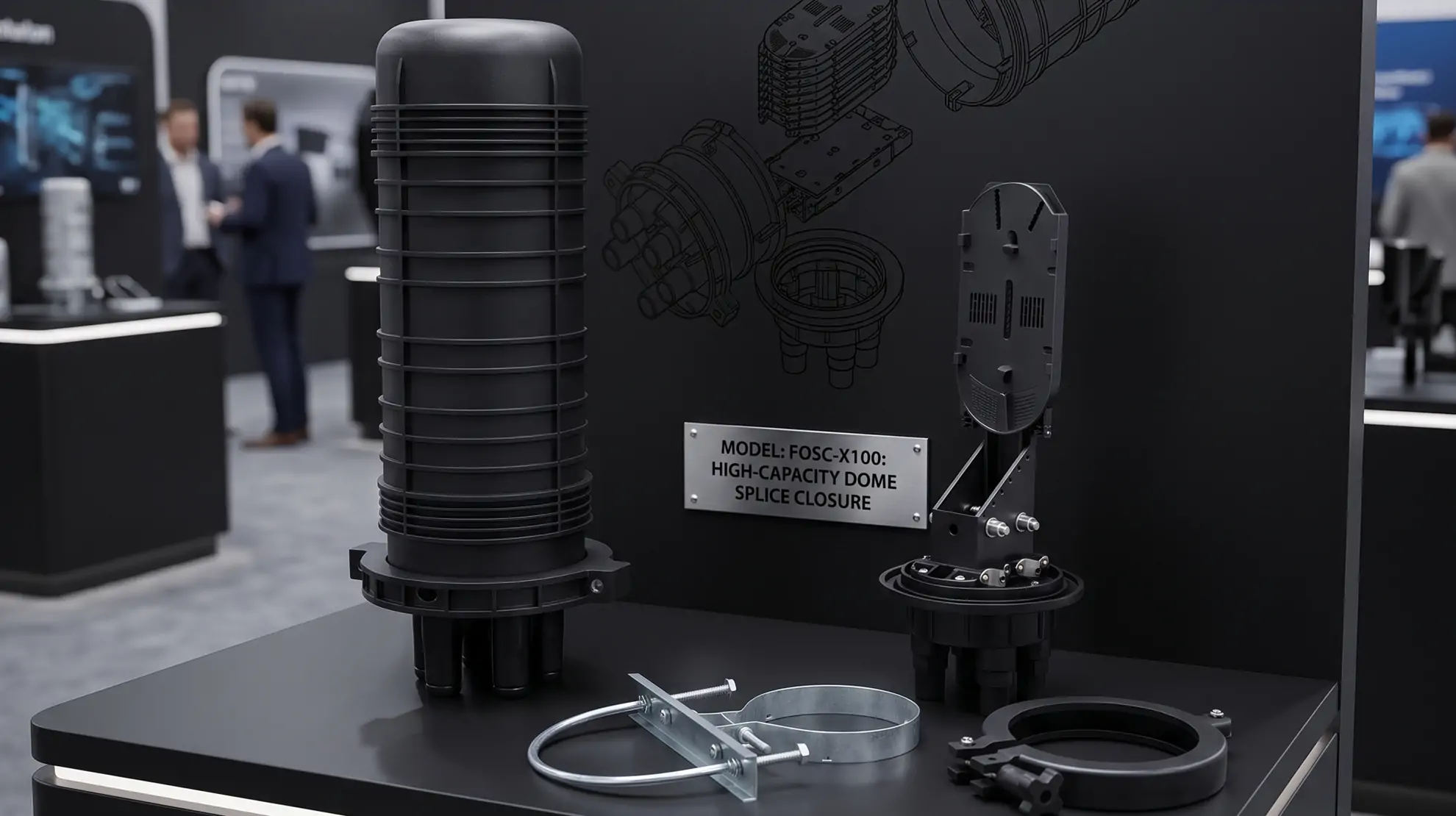
Fiber Splice Closure Guide
Dome vs inline designs, capacity and selection criteria for outdoor splicing.
Read Article →References
Key takeaway
A fiber optic enclosure is the passive box that protects and organizes every fiber and splitter in your distribution network. Getting the type, capacity, material and IP rating right at the planning stage prevents most of the expensive field problems that show up one to three years later. The enclosure itself is not expensive — from a few dollars for a small FDB to a few hundred for a large FDC. The truck roll to fix a bad installation is $200–500. Plan for the long term, not the minimum spec.
Related products