Fiber Distribution Cabinet Condensation: Why It Happens & How to Stop It
By Jergeo Engineering Team | Published October 2026 · 8 min read
You open an outdoor fiber distribution cabinet on a cool morning and find fine water droplets on the splice tray and adapters. The signal was fine last night, but connectors keep degrading and you worry about the whole ODN node. This is fiber distribution cabinet condensation — one of the most common field failures in outdoor fiber networks. This guide explains what causes it, how to detect it early, and the practical fixes to keep moisture out for good.
Summary
Fiber distribution cabinet condensation is caused by trapped humidity meeting a temperature swing inside an outdoor enclosure. Stop it with a three-part fix: seal all cable entries, control internal moisture with desiccant or a breather valve, and add a low-wattage heater in humid or coastal climates. Choose a well-sealed SMC or stainless IP65 cabinet to minimize the problem from the start.
What causes condensation in an outdoor fiber cabinet
Condensation is a physics problem, not a mystery. Warmer air holds more water vapor than cool air. When air inside a sealed cabinet is warm and humid — because the cabinet was closed on a warm day with moist air inside, or because poorly sealed cable entries let humidity in — the moisture has nowhere to go. When temperatures drop at night, the air cools, reaches its saturation point, and releases dew on cool surfaces. On an outdoor cabinet, those surfaces are the metal frame, the splice tray, and the adapter faces — exactly where you do not want water.
Three conditions make it worse:
- Big temperature swings — day heat to night cold maximizes the cooling that drives condensation.
- Trapped humidity — air sealed in during humid weather carries moisture that later condenses.
- Poor cable sealing — open glands and cable entries let humid air flow in and out freely.
Signs your fiber distribution cabinet has a moisture problem
- Visible droplets or fog on the splice tray, adapters, or metal frame in the morning.
- Rust or corrosion on screws, brackets, and tray hardware that was not there before.
- Intermittent optical loss or connector degradation that worsens overnight, then improves in the heat of the day.
- Damp inner surfaces when the door is opened on a cool morning.
Why IP65 alone does not stop condensation
An IP65-rated fiber distribution cabinet does an excellent job of keeping rain, dust, and low-pressure water jets out. But the IP code measures protection against external ingress, not internal humidity. A perfectly sealed, dust-tight cabinet can still develop condensation if warm moist air was sealed inside when it was closed. That is why a good outdoor cabinet combines ingress protection with internal moisture control — not relies on the rating alone.
Step-by-step troubleshooting checklist
- Inspect cable entries first — the most common entry point for humid air. Verify every gland is present, sized correctly, and tightened around the cable.
- Check the door seal and gaskets — look for cracks, gaps, or gaskets that have lost their compression after repeated opening.
- Feel for dampness on the frame, tray, and adapters on a cool morning to confirm condensation is present.
- Look for rust and corrosion as signs the moisture has been recurring.
- Measure and act — add desiccant, a breather valve, or a heater based on how persistent the moisture is.
How to stop moisture in an outdoor fiber distribution cabinet
1. Seal every cable entry. Use correctly sized glands and fill unused entries. This is the highest-impact, lowest-cost fix — it stops humid air from flowing in.
2. Control internal moisture. A desiccant pack absorbs residual humidity inside the sealed cabinet. For cabinets that need to equalize pressure with the air outside, fit a pressure-equalizing breather valve or breathable membrane that lets the cabinet breathe without letting rain in.
3. Add heat in humid or coastal climates. A low-wattage, thermostatically controlled heater keeps the internal temperature above the dew point, so condensation simply cannot form. Choose the smallest heater that suits the cabinet volume to avoid overheating splices.
4. Start with a better cabinet. A well-sealed SMC or stainless steel cabinet rated IP65, with gasketed doors and pre-sealed cable entries, keeps the starting humidity low and gives moisture control the best chance. Just as grounding must be designed in, so should moisture control — see how cabinet shell material (SMC vs steel vs ABS) affects long-term outdoor performance.
Prevention is cheaper than repair
Left unchecked, recurring condensation corrodes hardware, contaminates connector end faces, and causes intermittent optical loss that is expensive to chase. The good news: the fixes are cheap, well understood, and most can be applied without replacing the cabinet. A few minutes spent sealing glands and adding desiccant saves far more than a repeat field visit.
When you are choosing a new junction for your network, pick an outdoor fiber distribution cabinet built for the moisture challenge in the first place — IP65-rated, sealed, and ready for the environment it will sit in.
Related Products
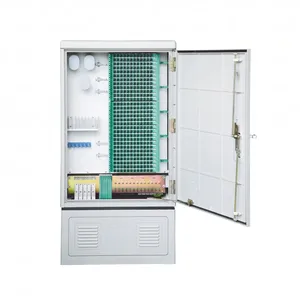
JFDC-288A Fiber Distribution Cabinet
288-port IP65 SMC hub for moisture-resistant outdoor nodes
View Product →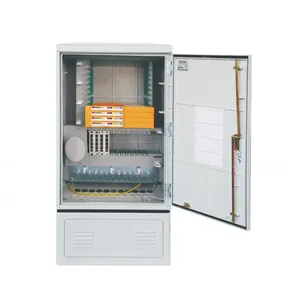
JFDC-144A Fiber Distribution Cabinet
144-port versatile wall and ground-mount IP65 cabinet
View Product →
Fiber Distribution Cabinet Range
All Jergeo outdoor fiber distribution cabinets, 72 to 1152 ports
View Category →Related categories
Related Articles
Fiber Distribution Cabinet Buying Guide
Capacity, material, IP rating and mounting for outdoor FDC.
Read Article →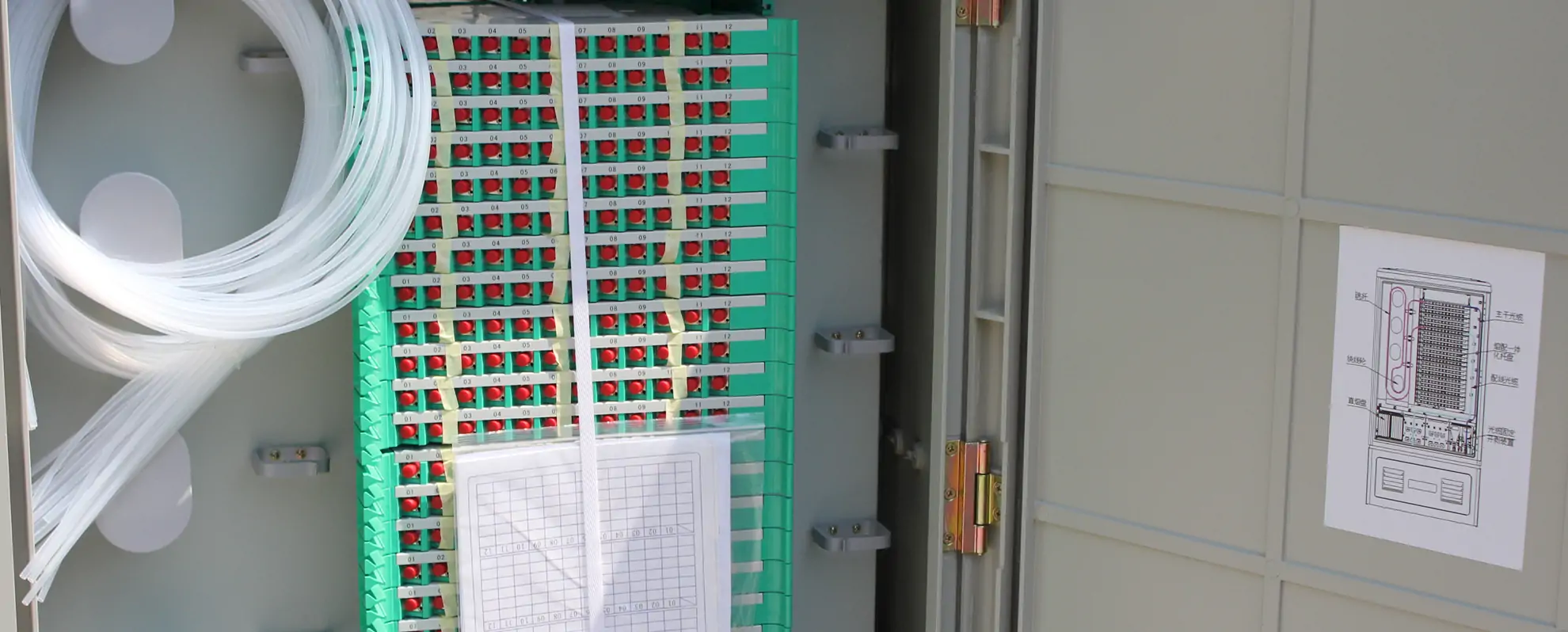
Fiber Cabinet Materials: SMC, Steel & ABS
How shell material affects durability and outdoor performance.
Read Article →
Fiber Cabinet Grounding & Lightning Protection
Grounding and lightning protection for outdoor fiber nodes.
Read Article →