CCTV Junction Box Selection Guide: Weatherproof Camera Terminations
By Jergeo Engineering Team | Published October 2026 · 8 min read
Behind every outdoor security camera, the bare ends of Power over Ethernet, BNC, or signal cable meet a power supply and a network connection. If those terminations are left exposed, moisture creeps in, connectors corrode, and the camera goes dark. A CCTV junction box is the small weatherproof enclosure that does this one job well: it keeps a single camera's cable joints, connectors, and terminations dry, organized, and tamper-resistant. This guide walks through the decisions behind picking the right security camera junction box for the site.
Summary
Choose a CCTV junction box by matching size, IP rating, material, and mounting to the site and the camera's cable terminations: IP54–IP65 for water resistance, ABS/fiberglass or metal by exposure and impact risk, a box sized to fit the terminations plus a service loop, and a mount (wall, pole, or ceiling) that keeps the joint accessible yet protected.
A CCTV junction box — also called a security camera junction box, surveillance camera junction box, or weatherproof CCTV junction box — is a compact, sealed housing that protects where a camera's cable is terminated and spliced. As an electrical junction box, its core job is more than containment: it keeps splices safe from moisture and short circuits, provides an accessible service point, and prevents accidental contact with live connections. For an outdoor camera, that translates directly into uptime — fewer weather-related faults and easier maintenance.
Why an outdoor camera needs a dedicated junction box
A camera's cable ends are its most fragile point. Without a housing, rain runs down the cable into the connector, temperature swings condense moisture inside terminations, and birds or rodents can damage exposed joints. A weatherproof CCTV junction box solves all three:
- Moisture seal — an IP54–IP65-rated housing keeps rain and humidity away from live terminations.
- Stress relief — cable glands anchor the incoming cable so movement doesn't fatigue the joint.
- Safe service point — a lid or plate gives a technician a clean place to inspect, re-terminate, or add a device without re-running cable.
Key decisions: size, IP rating, material, and mounting
1. Size: fit the terminations, leave a service loop
Size the CCTV junction box to the cable count and the joints inside. A single PoE or BNC camera with one short loop fits a compact box. Multiple cables, a small media converter, or fiber splices need a larger unit. Crucially, leave room for a service loop — enough slack to open the box and re-terminate comfortably. Too tight and every future repair turns into a cable re-run.
2. IP rating: match protection to exposure
The IP code decides how well the box resists dust and water. For a weatherproof CCTV junction box on a sheltered wall or ceiling, IP54 is the practical floor. For exposed poles, rooflines, and sites hit by direct rain or spray, step up to IP65 — fully dust-tight and water-jet resistant. When you're also choosing a camera cabinet for a cluster, apply the same exposure logic.
3. Material: plastic or metal by site risk
UV-stable ABS or fiberglass is lightweight, corrosion-free, and economical — ideal for most fixed domestic and light commercial camera junction boxes. For high-traffic, coastal, chemical, or high-impact locations, a metal enclosure holds up better: galvanized sheet steel at IP55 for general outdoor durability, or 304 stainless steel at IP65 where salt, moisture, or impact resistance matters most. The same material logic applies when you scale up to a CCTV camera cabinet.
4. Mounting: wall, pole, or ceiling
Mount the CCTV junction box as close to the camera as practical to keep exposed cable runs short. Wall and ceiling mounts suit most fixed cameras. Pole mounts are common for perimeter and street cameras. Choose a box whose cable entries (glands or knockouts) align with the cable approach direction so the seal stays clean.
CCTV junction box vs CCTV camera cabinet
The two are often confused. A CCTV camera cabinet is a larger enclosure that houses active network equipment — PoE switches, media converters, power supplies, and fiber terminators — and typically serves several cameras at an aggregated node. A CCTV junction box is the smaller, camera-adjacent housing that protects only the cable terminations of a single camera. Many installations use both: a junction box at each camera, and a cabinet at the aggregation point. If a site has a single camera but needs to house a small switch, a compact cabinet like the Jergeo JMC-A (516×400×205mm) bridges the gap.
Installation checklist for a reliable junction box
- Confirm the cable entry type (glands, knockouts) matches the cable approach.
- Leave a generously sized service loop inside before terminating.
- Click down all seals and glands; torque any screw-down covers evenly.
- Route the camera cable through its gland so water drips away from the joint.
- For coastal or industrial sites, choose stainless or a UV-stable metal box over budget plastic.
Choosing between a junction box and an equipment enclosure
The scale of the termination decides the housing. A single camera with a PoE joint fits a compact CCTV junction box. When you need to protect active devices or centralize several cameras — a small media converter, a switch, or a fiber terminator — move up to a CCTV equipment cabinet or an outdoor surveillance enclosure. Jergeo's outdoor surveillance cabinet range offers both compact wall/pole-mount units and larger ground-mount enclosures for aggregated sites.
The practical rule: protect terminations in a junction box, protect active equipment in a cabinet. Match both to IP rating and site exposure, and the camera system will run for years without weather-related downtime.
Related Products
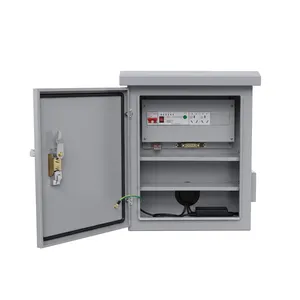
JMC-A Outdoor Surveillance Cabinet
IP55 galvanized wall/pole cabinet when a junction box needs space for a switch
View Product →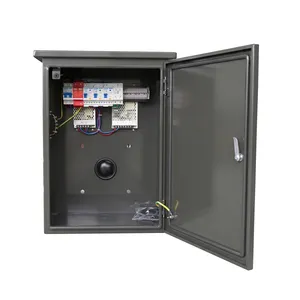
JMC-B Outdoor Surveillance Cabinet
IP65 304 stainless cabinet for corrosion-prone sites needing a small equipment enclosure
View Product →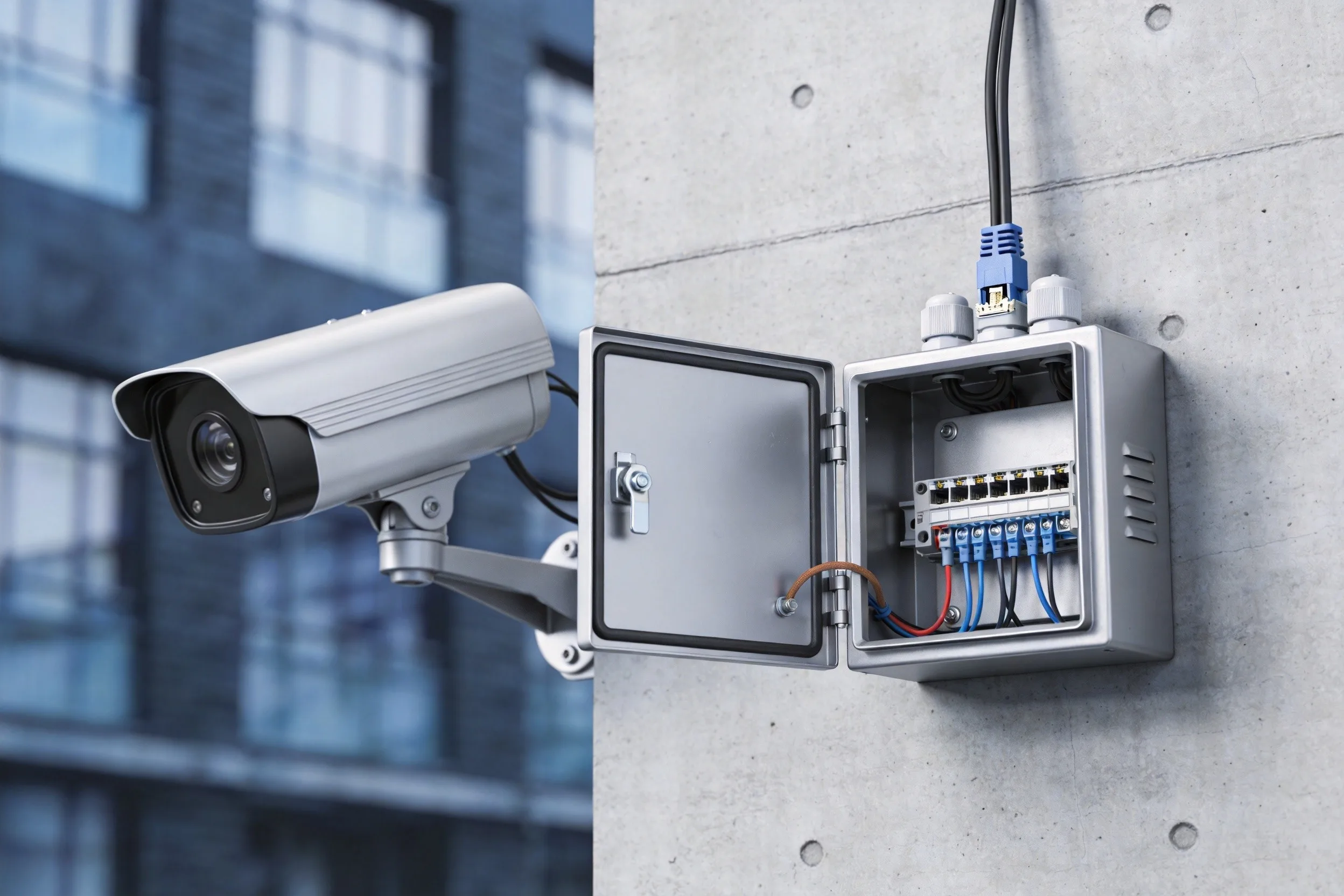
Surveillance Enclosure Range
All Jergeo outdoor surveillance cabinets, wall to ground mount
View Category →Related categories
Related Articles
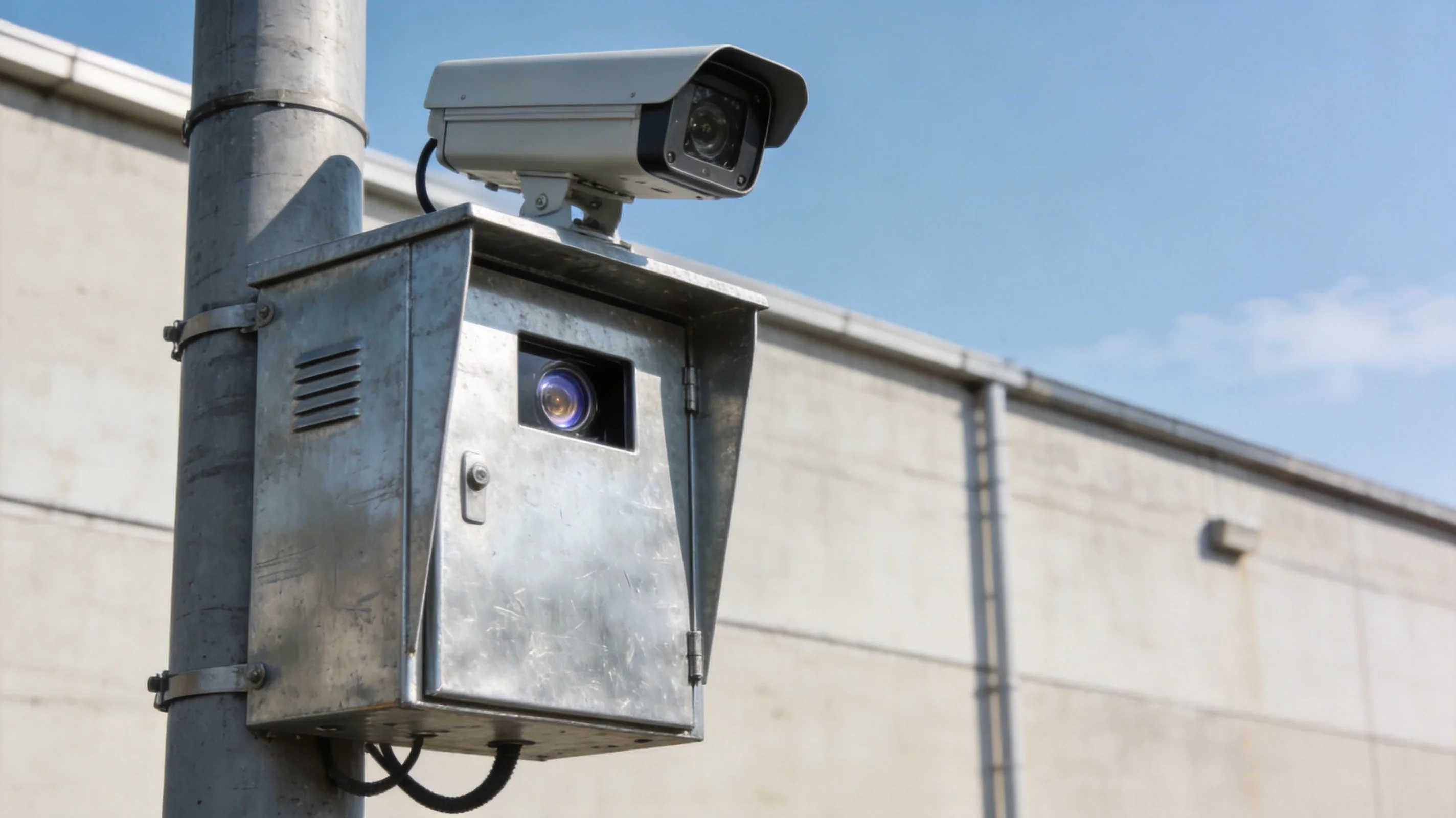
CCTV Camera Cabinet Selection Guide
IP rating, material, and mounting for full outdoor surveillance cabinets.
Read Article →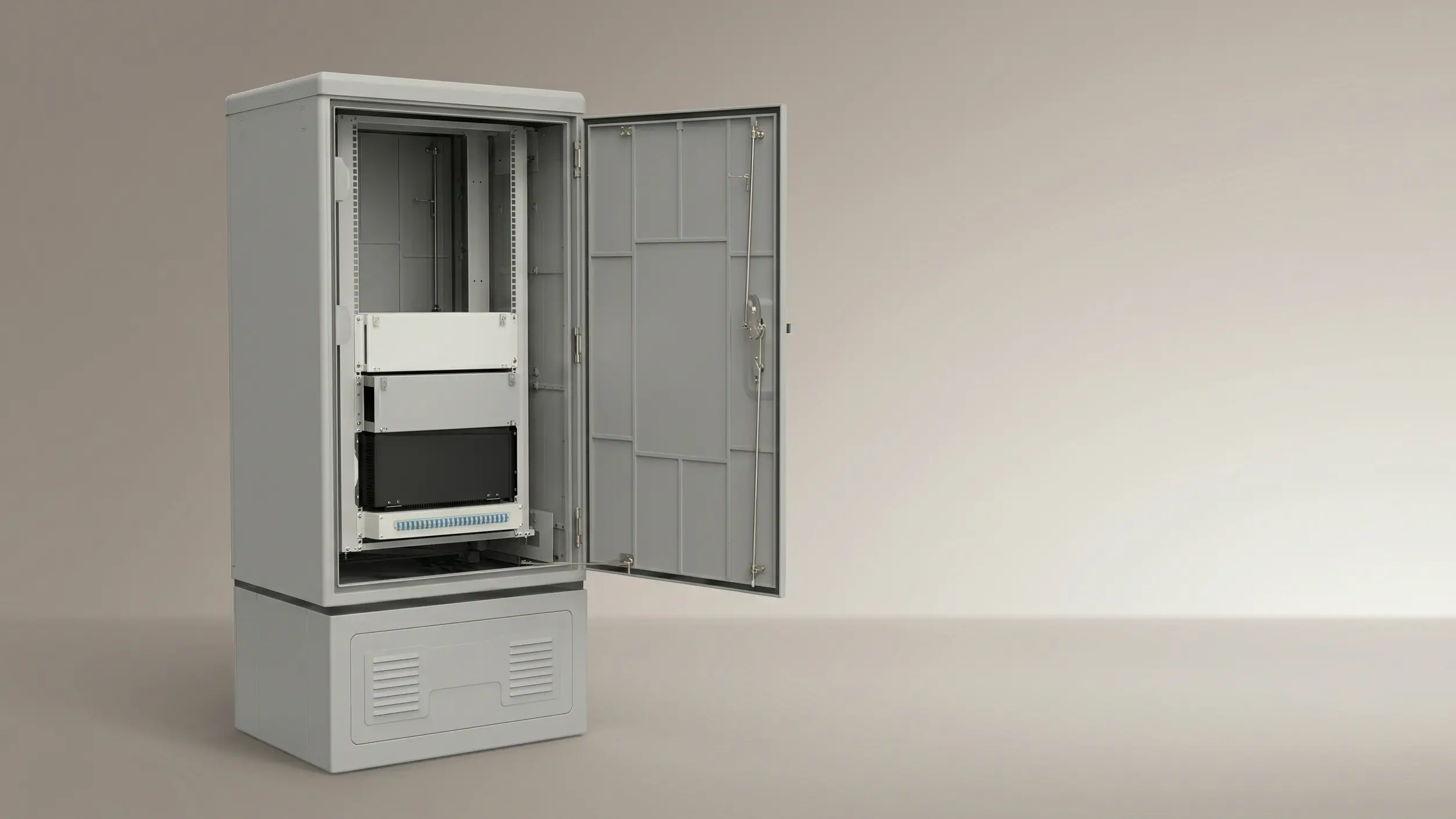
Outdoor Telecom Cabinet Selection Guide
How to choose a weatherproof enclosure for active outdoor equipment.
Read Article →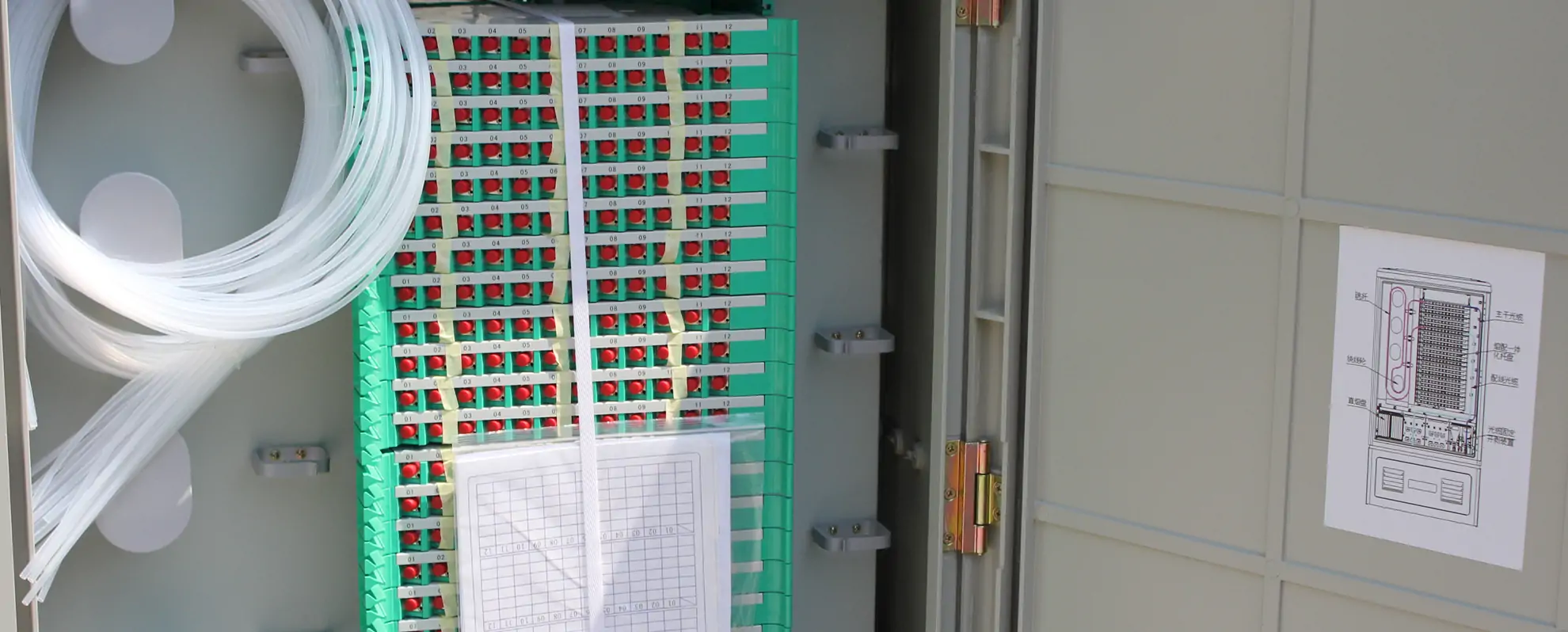
Fiber Cabinet Materials: SMC, Steel & ABS
How enclosure shell material affects durability and protection.
Read Article →